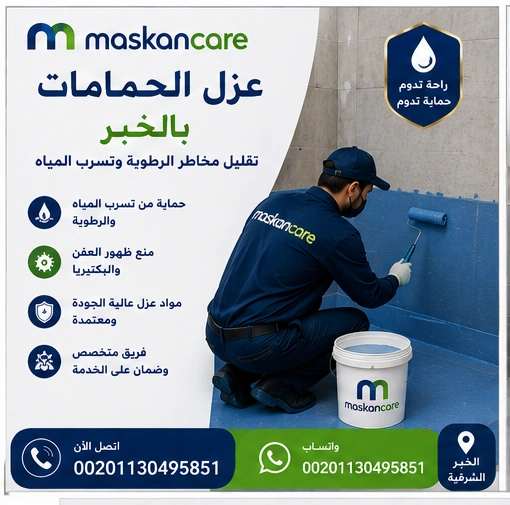
Bathroom Waterproofing in Al Khobar – Reducing the Risks of Moisture and Water Leakage 00201130495851 خدمة سريعة وبأرخص الأسعار
A comprehensive guide to bathroom waterproofing in Al Khobar, covering the causes of water leakage and moisture, the importance of waterproofing, common waterproofing systems, preparation and installation steps, common mistakes, maintenance, and how to choose the right professional service.
The Importance of Bathroom Waterproofing in Al Khobar
Bathroom waterproofing in Al Khobar is an important part of protecting buildings from problems associated with water leakage and moisture. Bathrooms are among the areas of a property that are exposed to water most frequently. Whether water comes from showers, sinks, floor cleaning, or other daily activities, protecting the underlying surfaces requires more than simply installing tiles and finishing the walls.
A bathroom may appear completely normal from the outside while a problem is developing underneath the tiles. With repeated exposure to water, moisture can find its way into areas that are not properly protected, especially when the waterproofing layer is missing, damaged, or incorrectly installed.
Some problems appear as damp patches on the ceiling below the bathroom, changes in paint color, a persistent musty smell, or water collecting in unusual areas. In other cases, there may be no obvious signs at first, which can make identifying the source of a leak more difficult.
A properly installed waterproofing system is designed to create a protective barrier that helps reduce water penetration into the layers beneath the bathroom finishes. However, the success of waterproofing does not depend only on the waterproofing product itself. Surface preparation, crack treatment, corners, joints, drainage areas, and pipe penetrations all need to be handled properly.
For this reason, waterproofing before installing final finishes is an important stage when constructing or renovating a bathroom. If an existing, fully finished bathroom develops a leak, the source of the water should first be identified before deciding how the problem should be treated.
Why Is Waterproofing Essential for Bathrooms?
Water that reaches a bathroom floor does not necessarily disappear completely as soon as it reaches the drain. Water can reach joints, weak points, or areas beneath the surface and gradually affect underlying layers.
Tiles may look intact while a problem exists underneath them. The joints between tiles, areas around drains, and pipe penetrations also require proper treatment so they do not become weak points in the waterproofing system.
This is why waterproofing is important. It provides a protective layer between water and the underlying structure of the bathroom in areas that are regularly exposed to moisture.
Proper waterproofing can help:
-
Reduce the possibility of water penetrating beneath the bathroom floor.
-
Limit moisture reaching nearby ceilings and walls.
-
Protect building layers from repeated exposure to water.
-
Reduce the possibility of visible moisture-related damage caused by leaks.
-
Help preserve bathroom finishes when the waterproofing system is properly installed and maintained.
-
Reduce the likelihood of extensive repairs and tile removal caused by water leakage.
However, it is important to distinguish between waterproofing and plumbing repairs. If water is leaking from a damaged pipe inside a wall, applying a waterproofing layer will not solve the actual source of the problem.
What Causes Water Leakage from Bathrooms?
Bathroom leakage does not always have one single cause. The problem may be related to waterproofing, plumbing, drainage, or finishing work.
Damaged Waterproofing
Over time, an old waterproofing layer may deteriorate or separate in certain areas. This can allow water to reach the layers underneath the bathroom finishes.
Cracks in Floors or Walls
Cracks and gaps in certain surfaces can provide pathways for water, particularly when those areas are repeatedly exposed to moisture.
Plumbing Problems
Leaks may develop because of loose connections, damaged pipes, or problems affecting parts of the water supply system.
Drainage Problems
Areas surrounding floor drains require careful installation. Weaknesses around these points can allow water to move into surrounding layers.
Damaged Tile Joints
Tile joints are not a substitute for waterproofing, but they are part of the overall bathroom finishing system. When joints deteriorate or separate, some areas may become more vulnerable to moisture.
Standing Water
If water does not flow properly toward the drain, it may remain on the floor for longer periods. This increases the amount of time that bathroom surfaces are exposed to water.
Signs That Your Bathroom Waterproofing May Have a Problem
A leak does not necessarily appear inside the bathroom itself. In some situations, the first visible signs can appear in the room below the bathroom or on an adjacent wall.
Stains on the Ceiling
Discoloration or damp patches on the ceiling below a bathroom may indicate a problem that needs to be inspected, particularly when the marks continue to return.
Persistent Moisture Odor
A continuous musty smell can be associated with moisture, although the smell alone cannot determine the exact source of the problem.
Peeling Paint
Paint that begins to peel may be affected by moisture. However, the source should be identified before deciding that waterproofing is the required solution.
Damaged Finishes
Changes or deterioration in surfaces surrounding the bathroom can sometimes be associated with moisture or water leakage.
Unexplained Water Loss
An unusual reduction in water levels may indicate a leak in the plumbing system. It does not necessarily mean that the waterproofing itself has failed.
This is why inspection is important before selecting a repair method.
The Difference Between Waterproofing Leaks and Plumbing Leaks
One of the most common mistakes is assuming that any water appearing below a bathroom means the waterproofing has failed.
In reality, the source could be a water pipe or drainage system.
If a damaged pipe is responsible for the leak, repairing the waterproofing alone will not stop the water from escaping.
On the other hand, if the plumbing system is functioning properly and water is moving from the bathroom floor into the underlying layers, inspecting the waterproofing system may be appropriate.
The first step should therefore be identifying the source of the leak rather than carrying out unnecessary work that may increase costs without solving the underlying problem.
Types of Bathroom Waterproofing Systems
There are different waterproofing systems available, and the appropriate choice depends on the surface, bathroom design, location, and stage of construction.
Cement-Based Waterproofing
Some cement-based waterproofing systems are specifically designed for waterproofing applications and may be suitable for certain bathroom surfaces according to the manufacturer's specifications.
Their performance depends on proper surface preparation and correct application.
Waterproof Membranes
Some projects use specialized waterproof membranes designed to reduce water penetration.
The appropriate membrane should be selected according to the surface, environmental conditions, and installation requirements.
Waterproof Coatings
Certain waterproofing products are applied to surfaces as one or more protective layers.
However, an ordinary coating should not be selected simply because it is described as water-resistant. The product should be appropriate for bathroom applications and the specific purpose for which it is being used.
Bathroom Waterproofing Before Tile Installation
One of the most suitable stages for waterproofing is during bathroom construction or renovation, when the floor and walls are accessible and the underlying surfaces can be properly inspected.
At this stage, defects can be repaired before tiles are installed. Special attention can also be given to pipe penetrations, drains, corners, and wall-to-floor junctions.
The process normally begins with inspecting and cleaning the surface. Areas requiring repair are then addressed before the selected waterproofing system is applied.
After application, the completed layer should be checked for visible defects before it is covered by tiles or other finishes.
This stage is particularly important because it allows potential waterproofing problems to be identified before the protective layer becomes hidden beneath the final finishes.
Waterproofing the Bathroom Floor
The bathroom floor is often the surface most frequently exposed to water, which makes it one of the most important areas to protect.
The floor should be clean and properly prepared, and any cracks or gaps that could affect the waterproofing system should be addressed.
Drain areas also require particular attention.
The presence of a floor drain does not automatically mean that the surrounding area is protected from leakage. The details around the drain need to be compatible with the waterproofing system being installed.
The floor should also allow water to move toward the drain properly. Good drainage helps prevent water from remaining on the surface for extended periods.
Waterproofing Bathroom Walls
Moisture is not limited to bathroom floors.
Walls around showers and other areas directly exposed to water may also require suitable protection.
Special attention should be given to corners, wall-to-floor junctions, and pipe penetrations.
However, not every bathroom wall has the same requirements. The level of protection needed depends on the bathroom design and how frequently each area is exposed to water.
The waterproofing approach should therefore be selected according to the actual conditions of the bathroom rather than applying the exact same method everywhere.
Waterproofing the Shower Area
The shower area is one of the most important parts of a bathroom when considering waterproofing.
Floors and walls in this area are exposed to water repeatedly, so the waterproofing work needs to be performed carefully.
Drainage should also be checked to make sure water flows toward the drain rather than spreading across the rest of the bathroom.
If water regularly escapes from the shower area and reaches other parts of the bathroom, there may be an issue with floor levels, drainage, or bathroom design rather than waterproofing alone.
The Importance of Waterproofing Corners and Surface Joints
Corners may seem insignificant compared with the total area of a bathroom, but they are important details within a waterproofing system.
The bathroom floor meets the walls at several points, while pipes and drains create additional openings through different layers.
If these areas are not treated properly, they can become weak points where water may pass through.
For this reason, corners, joints, pipe penetrations, and other detailed areas should be treated according to the selected waterproofing system and the manufacturer's installation instructions.
Preparing the Bathroom Before Waterproofing
Proper surface preparation is one of the most important factors in successful waterproofing.
Dust, loose materials, old weak layers, and contaminants that may interfere with adhesion should be removed.
Cracks and gaps should also be treated before applying the waterproofing layer.
If there is an active leak, it should not simply be covered with waterproofing without identifying where the water is coming from.
Some surfaces may also require repair or leveling before waterproofing begins.
The purpose of preparation is to provide a clean, stable, and suitable surface for the selected waterproofing system.
Steps for Bathroom Waterproofing
The exact process depends on the waterproofing system and the condition of the bathroom, but the work can generally be organized into several stages.
1. Bathroom Inspection
The floor, walls, drains, pipe connections, and other relevant areas are inspected to identify signs of leakage, moisture, or surface damage.
2. Identifying the Source of the Problem
If there is a leak, the source should be determined. It may be related to waterproofing, plumbing, or drainage.
3. Surface Preparation
The surface is cleaned and loose materials or contaminants that could affect the waterproofing system are removed.
4. Crack Treatment
Cracks, gaps, and damaged sections are repaired before the waterproofing system is installed.
5. Treating Detailed Areas
Corners, drains, pipe penetrations, and wall-to-floor junctions receive appropriate treatment based on the selected waterproofing system.
6. Applying the Waterproofing System
The selected product or system is applied according to the manufacturer's instructions.
7. Inspecting the Waterproofing Layer
The completed layer is checked for visible gaps, separation, exposed areas, or other obvious defects.
8. Waterproofing Testing
Where appropriate for the system and construction stage, testing can be carried out before the final finishes are installed.
Testing Waterproofing Before Installing Tiles
Testing the waterproofing at the appropriate stage can help identify problems before the protective layer is covered by tiles.
If a problem is discovered during this stage, it can be addressed without necessarily removing completed finishes.
The testing method should be suitable for the waterproofing system and should follow the relevant installation requirements or product instructions.
Testing cannot guarantee that a waterproofing system will never develop a problem in the future, but it can help verify its condition at the time of installation.
Waterproofing Bathrooms in New Buildings
When constructing a new house or villa, bathroom waterproofing can be incorporated into the construction plan from the beginning.
This makes it easier to prepare the floor and walls before tiles are installed and allows drainage points and pipe penetrations to be treated properly.
Planning waterproofing early can reduce the possibility of future problems that would otherwise require breaking tiles and rebuilding finished areas.
For this reason, waterproofing should be considered part of the bathroom construction process rather than something to think about only after a leak appears.
Waterproofing During Bathroom Renovation
Renovating a bathroom provides an opportunity to inspect the existing waterproofing.
If old tiles are being removed and the underlying surface becomes accessible, the existing layers can be evaluated and potential problems can be addressed before new finishes are installed.
The presence of an old waterproofing layer does not automatically mean that it is still performing properly. Its actual condition should be evaluated rather than assuming that it is suitable simply because it is still present.
Treating a Bathroom After a Leak Appears
If a leak appears in a completed bathroom, the first step should not automatically be breaking tiles or applying another waterproofing material.
The source of the leak should first be identified.
If the problem comes from plumbing, the damaged pipe or connection should be repaired.
If the drainage system is responsible, the drainage problem should be corrected.
If the waterproofing system itself has failed, the appropriate repair will depend on the extent of the damage and the condition of the existing finishes.
Some situations may require localized repairs, while others may require access to the waterproofing layer and replacement of a larger section.
Common Bathroom Waterproofing Mistakes
Using an Unsuitable Material
Choosing a waterproofing product based only on price or popularity can result in using a material that does not match the surface or application.
Ignoring Surface Preparation
Even an appropriate waterproofing material may not perform as expected if it is applied to a poorly prepared surface.
Covering Cracks Without Treating Them
Hiding a crack beneath a waterproofing layer does not necessarily eliminate the underlying problem.
Ignoring Pipe Penetrations
Areas where pipes pass through bathroom surfaces require careful treatment because they pass through different layers of the bathroom construction.
Neglecting Drains
Drain areas should be considered an essential part of the waterproofing process rather than treated as an afterthought.
Installing Tiles Before Checking Waterproofing
In new bathrooms, it is preferable to inspect and verify the waterproofing at the appropriate stage before it is covered by the final finishes.
Can Waterproofing Prevent Every Moisture Problem?
Waterproofing can reduce the risk of water penetration, but it is not a solution for every type of moisture.
Moisture can result from water leakage, condensation, poor ventilation, or other sources.
Therefore, the source should be identified before selecting a solution.
If the problem is caused by water escaping from the bathroom floor or walls, waterproofing may be part of the solution.
If the problem is caused by condensation and inadequate ventilation, improving ventilation may be necessary instead of relying on waterproofing alone.

The Role of Ventilation in Reducing Bathroom Moisture
Proper ventilation helps reduce the accumulation of humid air inside the bathroom.
During showers and other activities involving hot water, moisture levels can increase and water vapor may condense on cooler surfaces.
Suitable ventilation helps remove humid air from the bathroom.
However, ventilation is not a substitute for waterproofing.
If water is leaking through the bathroom floor or walls, improving ventilation alone will not repair the source of the leak.
How to Maintain a Bathroom After Waterproofing
Maintaining the bathroom after waterproofing requires regular attention.
Tile joints and finishes should be monitored, and any unusual water accumulation should be investigated.
Plumbing leaks should be repaired as soon as they are discovered.
It is also better to avoid drilling into the bathroom floor or making modifications without knowing where the waterproofing layer is located.
Unplanned work can damage the protective layer.
Keeping drains clear can also help prevent water from accumulating on the bathroom floor.
The Importance of Proper Bathroom Drainage
Good waterproofing should work together with an effective drainage system.
If water remains on the bathroom floor for long periods, the surfaces are exposed to moisture for longer.
The floor should be designed and finished so that water can move toward the drain properly.
If drainage is poor, the issue should be addressed rather than expecting waterproofing alone to solve the problem.
A bathroom requires both water protection and effective water removal.

When Should You Hire a Bathroom Waterproofing Company?
Professional assistance may be appropriate if you are dealing with:
-
Repeated bathroom water leakage.
-
Damp spots below the bathroom.
-
A deteriorated old waterproofing layer.
-
Cracks in the bathroom floor.
-
A recurring problem after a previous repair.
-
Construction of a new bathroom.
-
Renovation of an old bathroom.
-
A leak with an unclear source.
-
Persistent water accumulation around the shower area.
A specialized company can begin with an inspection instead of immediately applying an unnecessary solution.
Choosing a Bathroom Waterproofing Company in Al Khobar
Choosing the right company should not depend on price alone.
It is useful to know whether the company inspects the site before recommending a service, what type of materials it uses, how the surface is prepared, and how drains, corners, and pipe penetrations are treated.
It should also be clear whether the problem requires new waterproofing, plumbing repair, drainage work, or a combination of services.
Every bathroom has different conditions, so a single solution cannot necessarily be considered suitable for every property.
A professional assessment helps ensure that the proposed service addresses the actual problem.

Bathroom Waterproofing in Al Khobar with MaskanCare
When you need bathroom waterproofing in Al Khobar, MaskanCare can be considered for evaluating the bathroom's requirements and identifying the nature of the problem before the appropriate solution is carried out.
The goal should not simply be to cover a surface with a waterproofing material. The actual cause of the problem should be understood first.
If the bathroom has a leak, the source of the water should be investigated.
If the bathroom is newly constructed or undergoing renovation, the surface can be prepared before waterproofing is installed.
Special attention can also be given to areas that require careful treatment, including corners, drain surroundings, and pipe penetrations, because these details are important components of a complete waterproofing system.
The appropriate waterproofing method depends on the surface condition, construction stage, bathroom design, and intended use. A preliminary assessment therefore helps determine a solution that is more suitable for the specific situation.
Why Should Bathroom Water Leaks Be Addressed Early?
A water leak may start as a small issue, but continuous exposure of underlying layers to water can gradually increase the scope of the problem.
The effects may eventually become visible on the ceiling below the bathroom or on an adjacent wall.
Discovering a leak after all finishes have been completed may also make access to the source more difficult in some cases.
For this reason, responding to early warning signs is preferable to waiting until the damage becomes extensive.
If you notice a damp patch, unusual discoloration, or a change in the condition of a nearby ceiling or wall, it is better to have the area inspected to determine where the water is coming from.
Bathroom Waterproofing for Villas and Homes
In villas and multi-story homes, bathrooms may be located directly above bedrooms, living rooms, or other frequently used areas.
A leak from an upper-floor bathroom can therefore affect the ceiling and finishes in the space below.
Proper waterproofing during construction is an important preventive measure in these situations.
Upper-floor bathrooms deserve particular attention because any leakage may spread its effects to lower areas of the property.
Regular inspection and maintenance can help identify developing problems earlier.
Bathroom Waterproofing for Commercial Buildings
Bathrooms in commercial buildings may experience more frequent use than some residential bathrooms.
This means floors, walls, drains, and surrounding finishes can be exposed to water repeatedly.
For this reason, the condition of waterproofing, drainage, and bathroom finishes should be monitored as part of regular property maintenance.
Having an appropriate inspection and maintenance plan can make it easier to identify leaks and other problems before they affect surrounding areas.
Waterproofing and Long-Term Maintenance
Installing waterproofing does not mean that a bathroom will never require maintenance.
Pipes can deteriorate, joints may require attention, and drains can become blocked.
Maintenance, renovation, or installation work can also affect an existing waterproofing layer.
The bathroom should therefore be treated as an integrated system that includes waterproofing, plumbing, drainage, and finishes.
Addressing small problems early can make it easier to preserve the bathroom's condition and reduce the possibility of more extensive repairs later.

Final Thoughts
Bathroom waterproofing in Al Khobar is an important step in reducing the risks associated with moisture and water leakage and protecting the layers beneath bathroom finishes.
However, effective waterproofing begins with understanding the problem rather than simply selecting a waterproofing material.
The bathroom should be inspected, the source of any leak should be identified, surfaces should be properly prepared, and cracks and defects should be treated before the appropriate waterproofing system is installed.
In new bathrooms, waterproofing before tile installation provides an opportunity to identify and correct problems before the protective layer is covered. In completed bathrooms, a detailed inspection is important when leakage appears so that the source can be identified as waterproofing failure, plumbing damage, or drainage problems.
Waterproofing should also work alongside proper ventilation, effective drainage, sound plumbing, and regular maintenance. Moisture can have multiple causes, and addressing the actual source is essential for achieving a practical long-term solution.
If you are building a new bathroom, renovating an existing one, or dealing with water leakage or moisture, assessing the condition of the bathroom before beginning repair work can help determine the most suitable approach.
For professional assistance with bathroom waterproofing in Al Khobar, you can contact MaskanCare to discuss your property's requirements and determine the appropriate service.
Contact Number: 00201130495851
WhatsApp: Contact MaskanCare on WhatsApp
Protect your bathroom and surrounding areas by addressing water leakage and moisture problems early, before they have an opportunity to develop into more extensive building issues.