Causes of Weak Insulation in Roofs and Buildings Near Coastal Areas in Qatif 00201130495851 خدمة سريعة وبأفضل الأسعار
Learn about the main causes of weak insulation in roofs and buildings near coastal areas in Qatif, including the effects of humidity, salts, heat, cracks, and poor installation, along with practical tips for maintaining effective insulation.
Causes of Weak Insulation in Roofs and Buildings Near Coastal Areas in Qatif
Roofs and buildings in Qatif are exposed to several factors that can affect insulation efficiency over time, especially buildings located near coastal areas, where they are more exposed to humidity, salt-laden air, high temperatures, and direct sunlight. The nature of the problem varies from one building to another depending on the building’s age, the type of insulation used, the quality of installation, and the level of maintenance provided.
Coastal environments require special attention when it comes to roofs and exterior walls because humidity and salts can gradually affect certain building materials and insulation layers. At the same time, high temperatures can cause some materials to expand and contract as temperatures change. Qatif has a coastal location and a hot, humid climate during long periods of the year, making the selection and proper installation of suitable insulation particularly important for buildings.
For this reason, weak insulation in roofs and buildings near the coast is not always caused by the insulation material reaching the end of its service life. The problem may also be related to poor installation, unsuitable materials, cracks, or water leaks that were not addressed at the right time.
MaskanCare provides solutions for dealing with insulation problems in roofs and buildings, with a focus on identifying the actual cause of the problem and selecting the appropriate treatment method according to the condition of the roof, the nature of the building, and the surrounding environmental conditions.
Best Way to Maintain Roof Insulation in Qatif
Maintaining insulation starts with understanding the factors that can cause it to weaken. Regardless of how good the insulation material is, it requires proper installation and regular inspection, especially in areas exposed to humidity, heat, and salts.
Insulation problems may begin with something as small as a minor crack or separation in one of the layers. Over time, the problem can become more serious if water reaches the internal layers or if moisture continues to affect the roof.
Regular roof inspections can therefore help identify problems at an early stage instead of waiting until clear signs appear inside the building, such as dampness, peeling paint, or stains on ceilings and walls.

Benefits of Maintaining Roof Insulation in Qatif
There are several benefits to maintaining insulation and addressing weak points at an early stage, including:
· Reducing the possibility of rainwater entering the building.
· Limiting the effect of humidity on roofs and walls.
· Reducing heat transfer from the roof to the interior areas.
· Protecting roof layers from external weather conditions.
· Reducing the impact of salts and moisture on certain building materials.
· Helping maintain the condition of the building for a longer period.
· Reducing the need for repeated repairs caused by neglected insulation.
· Improving the performance of waterproofing and thermal insulation when properly installed.
Having an insulation layer on the roof does not mean that the building will never require inspection or maintenance, as insulation itself can be affected by external factors over time.
Effect of Coastal Humidity on Roof Insulation in Qatif
Humidity is one of the most important factors to consider when dealing with buildings located near the coast. Qatif is a coastal city overlooking the Arabian Gulf, and humidity levels can be particularly high during the summer months.
Continuous exposure to humidity can affect certain insulation layers when they are unsuitable for the surrounding conditions or have not been properly installed.
The problem may initially appear in small areas that the property owner may not notice, such as points where different layers meet, joints, or areas that have developed cracks.
Over time, these weak points can allow moisture and water to penetrate the roof layers, making the problem more difficult to repair compared with addressing it at an early stage.
Therefore, humidity should not be treated as a minor issue, especially when it repeatedly appears inside the building or becomes noticeable after rainfall.
Effect of Salts on Insulation and Buildings Near the Coast
A coastal environment does not only mean higher humidity. Salts present in the surrounding environment can also be an additional factor that should be considered when selecting insulation materials and exterior finishes.
Salt deposits can accumulate on exterior surfaces or reach pores and cracks in building materials. When combined with moisture, they may contribute to changes in the appearance of surfaces or the weakening of certain exterior layers.
Specialized insulation sources indicate that humidity and salts can gradually affect materials and increase the possibility of damage to some traditional insulation systems when they are not suitable for coastal environments.
For this reason, choosing insulation should not be based on price alone. The material’s ability to handle humidity, external conditions, and the nature of the surface where it will be applied should also be considered.
Effect of Sun Heat on Roof Insulation in Qatif
High temperatures are among the factors that continuously affect roofs, especially during summer when roof surfaces are exposed to direct sunlight for long hours.
As temperatures rise and fall, some materials can expand and contract. If the roof layers or joints have not been properly installed, cracks or separation may develop in certain areas.
This does not mean that heat alone is responsible for weak insulation, but it can increase the impact of problems that already exist on the roof, especially when cracks or weaknesses are present in the insulation material.
For this reason, it is better to inspect the roof before applying any new insulation. Installing a new layer over a surface that already has existing problems may not provide the desired results.

Causes of Weak Waterproofing on Roofs in Qatif
Several factors can lead to weak waterproofing performance, including:
· Using an insulation material that is unsuitable for the roof.
· Inadequate surface preparation before installation.
· Existing cracks that have not been repaired.
· Poor installation of waterproofing layers.
· Weak joints or connection points.
· Long-term exposure of the insulation layer to sunlight and weather conditions.
· Water accumulation on the roof due to poor drainage.
· Damage to the protective outer layer of the insulation.
· Neglecting regular maintenance.
· Installing insulation over an uneven or improperly prepared surface.
In some cases, the problem may be related to drainage rather than the insulation material itself. Continuous water accumulation on the roof places greater pressure on the waterproofing layer and may increase the possibility of problems developing over time.
Causes of Weak Thermal Insulation in Buildings in Qatif
Thermal insulation faces different challenges from waterproofing, particularly in areas with high temperatures.
Thermal insulation performance can weaken due to the use of unsuitable materials, incomplete coverage of the required areas, gaps between insulation sections, or damage to the exterior layer that protects the insulation.
Windows, doors, walls, and roofs can also affect the thermal efficiency of a building. Therefore, it is not always appropriate to focus on the roof alone when the main issue is excessive indoor heat.
Choosing an insulation system that suits the local climate is an important step, especially because the architecture of Qatif has historically developed methods and local materials that help buildings adapt to hot and humid climatic conditions.
Common Mistakes That Cause Roof Insulation to Weaken
There are several mistakes that can occur during insulation work and may negatively affect the final result.
Some of the most common mistakes include:
· Choosing the cheapest material without knowing whether it is suitable.
· Failing to clean and prepare the roof before starting the work.
· Ignoring cracks in the concrete.
· Failing to address areas where water accumulates.
· Applying insulation over a surface that contains moisture or existing problems.
· Neglecting joints and areas where the roof meets the walls.
· Leaving sections of the roof without insulation.
· Failing to protect the insulation layer after installation.
· Continuing to rely on old insulation despite visible signs of damage.
· Failing to conduct regular inspections after completing insulation work.
Avoiding these mistakes becomes even more important in coastal areas because the surrounding environment can place additional stress on insulation materials over time.
Weak Insulation Caused by Roof Cracks
Cracks are signs that should not be ignored, especially when they appear in concrete roofs, around joints, or where different structural elements meet.
Some cracks may be minor and superficial, while others may require more specialized treatment depending on their size, location, and cause.
The problem is that applying insulation over an active crack without addressing its underlying cause may result in the problem returning, even when a high-quality insulation material is used.
Therefore, the roof should be inspected first to determine the cause of the crack, followed by selecting the appropriate repair method before installing new insulation layers.
Weak Insulation Caused by Rainwater Accumulation
Water accumulation can negatively affect roofs, particularly when water remains on the surface for extended periods after rainfall.
If the roof does not have adequate drainage or contains low areas where water remains trapped, the insulation layer may be continuously exposed to moisture.
The problem may appear as damp spots inside the building or water leaks from the ceiling, although in some cases it can take a long time before the internal effects become visible.
For this reason, checking the roof slope and drainage outlets is an important part of evaluating insulation performance. It is not always enough to focus only on the insulation layer itself.
Effect of Poor Insulation Installation on Building Life
Good insulation does not depend only on the material. It also depends on how the entire system is installed.
Even high-quality insulation materials can lose part of their effectiveness if they are applied to an improperly prepared surface, if joints and cracks are ignored, or if the recommended installation method is not followed.
With continued moisture or water leakage, certain parts of the building can gradually be affected, and signs of the problem may eventually appear in paint, ceilings, or walls.
In coastal environments, humidity and salts can add to the challenges faced by the building. This is why prevention and early maintenance are preferable to waiting until visible damage becomes extensive.

Waterproofing and Thermal Insulation for Roofs in Qatif
Some buildings may require both waterproofing and thermal insulation, particularly when the roof is exposed to rainwater and high temperatures at the same time.
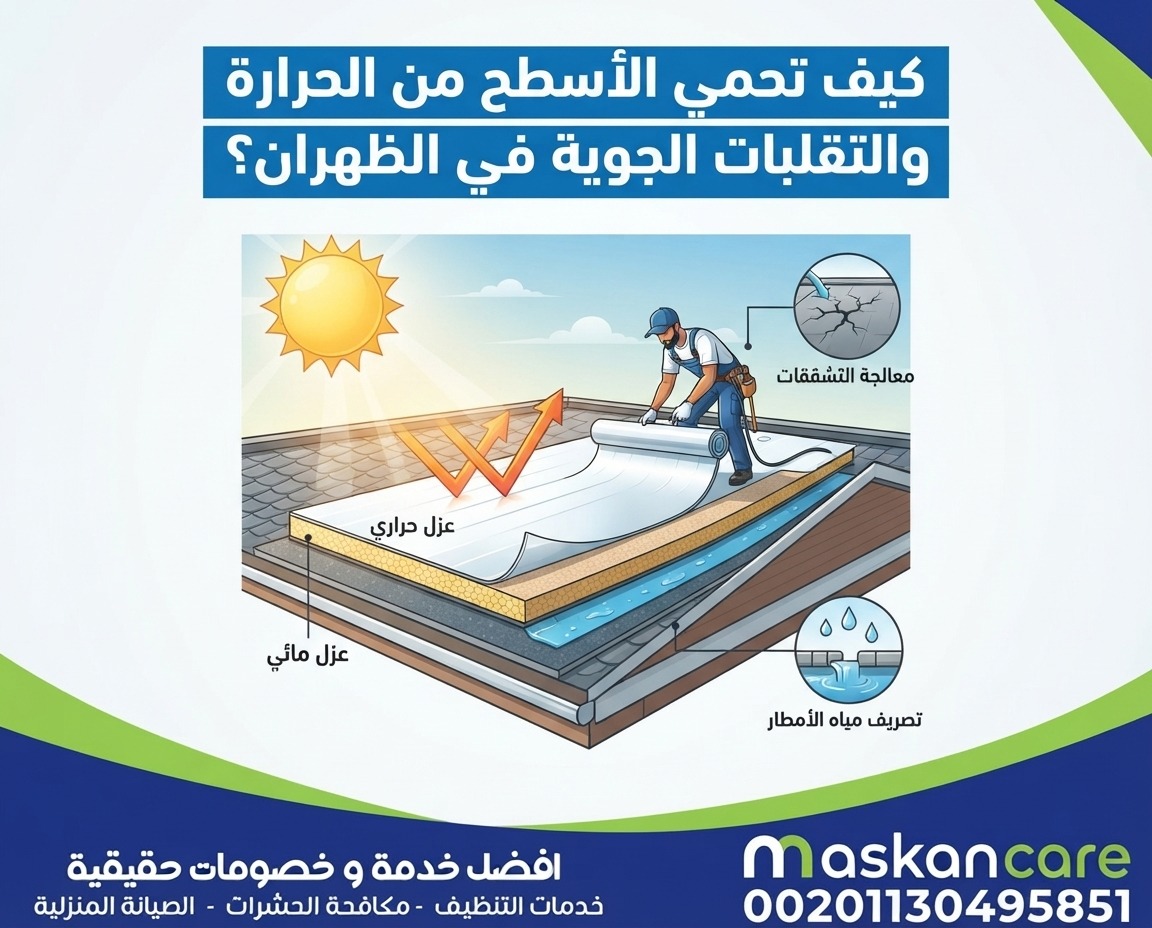
Waterproofing aims to reduce the penetration of water and moisture into the building layers, while thermal insulation helps reduce heat transfer from the exterior to the interior.
However, the appropriate system depends on the condition of the roof, the type of building, and the existing layers. The same system does not necessarily suit every building.
Therefore, inspecting the roof before carrying out insulation work helps identify the actual problem and select the solution that best fits the situation.
Steps to Treat Weak Roof Insulation in Qatif
Weak insulation can be addressed through an organized process that focuses on identifying the actual cause instead of treating only the visible symptoms:
· Initial Inspection: Inspect the roof and identify weak areas, cracks, and water accumulation.
· Problem Identification: Determine whether the issue is related to water, heat, moisture, or a combination of factors.
· Insulation Layer Inspection: Check the condition of the existing material and identify any separation or damage.
· Crack Repair: Repair cracks and weak points before installing new insulation.
· Surface Preparation: Clean the roof, remove weak sections, and prepare the surface for the work.
· Insulation Material Selection: Select the appropriate material according to the roof condition and external environment.
· Insulation Installation: Apply the insulation layers correctly while paying attention to joints and sensitive areas.
· Final Protection: Protect the insulation layer from factors that may affect it after installation.
· Final Inspection: Make sure the targeted areas have been properly treated and that there are no exposed sections.
Importance of Maintaining Insulation in Buildings Near the Coast
Regular maintenance helps identify problems before they develop into larger forms of damage.
A small defect in an insulation layer may be easy to repair, but ignoring it can allow water to enter or moisture to remain present for a long period.
Some of the main benefits of monitoring insulation include:
· Detecting cracks at an early stage.
· Reducing the possibility of water leakage.
· Maintaining thermal insulation efficiency.
· Reducing the impact of moisture on the building.
· Limiting damage to interior paint and finishes.
· Reducing the cost of major repairs.
· Maintaining the condition of the roof for a longer period.
· Identifying the appropriate time to renew insulation layers.
Maintenance becomes particularly important for buildings near coastal areas because of the surrounding environmental conditions and high humidity during long periods of the year.
How to Choose the Right Insulation Material for Coastal Areas
There is no single insulation material that is suitable for every roof and building. The right choice depends on the surface, the existing problem, and the type of insulation required.
In coastal areas, it is important to consider the material’s resistance to moisture and external conditions, as well as its compatibility with the surface and installation method.
It should also be understood that some materials may perform well in dry environments but may not provide the same performance when continuously exposed to moisture and salts.
Therefore, choosing insulation should be part of a complete assessment that considers the surface itself, the installation method, existing layers, and the climatic factors surrounding the building.

MaskanCare Tips for Maintaining Roof Insulation in Qatif
To maintain insulation and reduce the possibility of deterioration over time, the following tips can be followed:
· Inspect the roof regularly.
· Do not ignore cracks that appear in concrete.
· Clean rainwater drainage outlets regularly.
· Prevent water from accumulating on the roof whenever possible.
· Inspect the insulation layer after rainy seasons.
· Pay attention to areas around water and drainage pipes.
· Avoid carrying out random repairs over the insulation layer.
· Choose materials suitable for the coastal environment.
· Address moisture as soon as signs appear.
· Renew insulation when visible damage is found in old layers.
· Inspect interior walls and ceilings when stains or peeling paint appear.
· Do not base your choice of insulation service on price alone.
Does Coastal Humidity Cause Insulation to Weaken?
Coastal humidity is one of the factors that should be considered when designing, installing, and maintaining insulation, but it is not the only reason insulation can weaken.
Material quality, installation method, roof condition, drainage, and maintenance all affect insulation performance.
In Qatif, where humidity can be high during certain periods of the year due to its coastal location, selecting a suitable insulation system and maintaining it regularly becomes particularly important.
Do Salts Affect Roof Insulation?
A salty coastal environment can increase the challenges faced by certain building and insulation materials, particularly when combined with continuous moisture.
The effects usually develop gradually, so property owners may not notice the impact of salts at first.
For this reason, it is preferable to choose materials suitable for coastal environments, while regularly monitoring the roof and addressing any damage or cracks at an early stage.
Can Old Insulation Weaken Over Time?
Yes. Insulation layers can be affected over time due to continuous exposure to sunlight, moisture, water, and external environmental conditions.
However, the lifespan of insulation does not depend on one factor alone. It is affected by the material type and quality, installation method, environmental conditions, and level of maintenance.
Therefore, insulation should not automatically be replaced simply because a certain number of years have passed without first inspecting its condition. At the same time, damaged insulation should not continue to be used simply because it has not reached a specific age.
When Does a Roof Need New Insulation?
A roof should be inspected when signs such as the following appear:
· Water leakage inside the building.
· Damp spots on the ceiling.
· Peeling paint.
· Visible cracks.
· Separation of parts of the insulation layer.
· Water accumulation on the roof.
· Noticeably high indoor temperatures.
· Visible damage to exterior layers.
The appearance of one of these signs does not necessarily mean that the entire insulation system must be replaced. In some cases, the problem may be solved through partial repair after identifying the actual cause.
Protecting Buildings Near the Coast in Qatif
Buildings located near coastal areas in Qatif require continuous attention to roofs, walls, and exterior layers because several environmental factors can affect them, including heat, humidity, salts, and dust.
The level of impact can vary from one building to another depending on its location, distance from the coast, design, and the materials used.
Therefore, one of the best ways to protect the building is to avoid waiting until major damage appears. Regular inspection and early treatment of weak points can help prevent problems from developing further.
Roof Insulation Prices in Qatif
There is no fixed price that applies to all insulation work because the cost varies according to the roof, the size of the project, and the condition of the existing insulation.
Some of the main factors that can affect the cost include:
· Roof area.
· Roof type.
· Type of insulation required.
· Condition of the existing insulation.
· Number of cracks and weak points.
· Presence of water leaks.
· Need to remove old insulation layers.
· Condition of the roof slope and drainage system.
· Type of material used.
· Whether waterproofing alone or both waterproofing and thermal insulation are required.
An inspection and proper assessment of the roof can help determine the appropriate solution and provide a more accurate cost estimate instead of relying on one fixed price for every building.
Causes of Weak Insulation in Coastal Roofs and Buildings in Qatif
Weak insulation in buildings near the coast is usually not caused by a single factor. It may result from a combination of humidity, salts, high temperatures, cracks, poor installation, unsuitable materials, or lack of maintenance.
Therefore, solving the problem should begin by identifying its actual cause rather than simply covering the damaged area with another layer of insulation.
Early inspection is one of the best ways to reduce the development of insulation problems, particularly for roofs that are continuously exposed to external weather conditions.
MaskanCare focuses on addressing insulation needs according to the condition of the roof and the nature of the problem, with an emphasis on selecting the right solution for each building instead of applying the same method to every situation.

Book Roof Insulation Service in Qatif
If you have started noticing water leaks, moisture, or cracks on your roof, or if you feel that the insulation is no longer performing as it should, it is better not to delay the inspection.
Start by identifying the cause of the weak insulation, then select the appropriate treatment method, whether that involves repairing cracks, renewing waterproofing, adding thermal insulation, or addressing multiple problems at the same time.
MaskanCare – Better protection for roofs and buildings against moisture, heat, and coastal environmental factors in Qatif.
Phone Number: 00201130495851
WhatsApp Number: +00201130495851