Causes of Water Tank Insulation Damage Over Time in Al Ahsa 00201130495851 خدمة سريعة وبأفضل الأسعار
Learn about the causes of water tank insulation damage over time in Al Ahsa, the main warning signs of damaged insulation, and how heat, cracks, moisture, and improper installation can affect water tanks, along with practical tips for maintaining and re-insulating your tank.
Causes of Water Tank Insulation Damage Over Time in Al Ahsa
The causes of water tank insulation damage over time in Al Ahsa are among the issues that require continuous attention, because water tank insulation does not maintain the same level of efficiency forever. Over the years, the insulation layer may gradually lose some of its strength, develop small cracks, or become affected by moisture, heat, and the continuous pressure of stored water.
In Al Ahsa, water tanks can be exposed to temperature changes and environmental factors that may affect insulation materials, especially elevated and exposed tanks that remain under direct sunlight for long periods. Neglecting tank inspections or delaying the treatment of minor problems can also allow the damage to gradually develop into visible leakage or weakness in the tank walls.
MaskanCare provides specialized water tank inspection and insulation services in Al Ahsa, with attention to the tank condition, the existing insulation type, and the actual cause of the problem before carrying out any work. The goal is to address the main cause of the damage rather than simply covering the visible part of the problem.
For booking and inquiries: 00201130495851

Why Does Water Tank Insulation Get Damaged Over Time?
Water tank insulation is a protective layer that helps reduce water leakage, moisture, and the impact of external factors on the tank structure. With continuous use, this layer can be exposed to different conditions that gradually reduce its efficiency.
The appearance of minor insulation damage does not necessarily mean that the entire tank has become unusable. The real problem is ignoring the early warning signs and failing to inspect them at the right time.
Some of the most common causes of water tank insulation damage include:
-
Aging insulation that needs to be renewed.
-
Long-term exposure to direct sunlight and high temperatures.
-
Cracks appearing in concrete or the tank structure.
-
Using insulation materials that are unsuitable for the type of tank.
-
Improper insulation installation from the beginning.
-
Poor surface preparation before applying the insulation material.
-
Continuous water pressure inside the tank.
-
Moisture and water leakage around the tank.
-
Neglecting regular inspection and maintenance.
-
Damage around connections or water inlet and outlet points.
Understanding the cause of insulation damage helps determine the right solution, because applying a new layer over old and damaged insulation without addressing the underlying problem may not provide the desired result.
The Effect of Al Ahsa Weather on Water Tank Insulation
High temperatures are among the causes of water tank insulation damage over time in Al Ahsa, particularly when the tank is located in an exposed area and receives direct sunlight.
Continuous exposure to heat can gradually affect certain insulation materials. Repeated temperature changes can also affect the different surfaces and materials used in and around the tank.
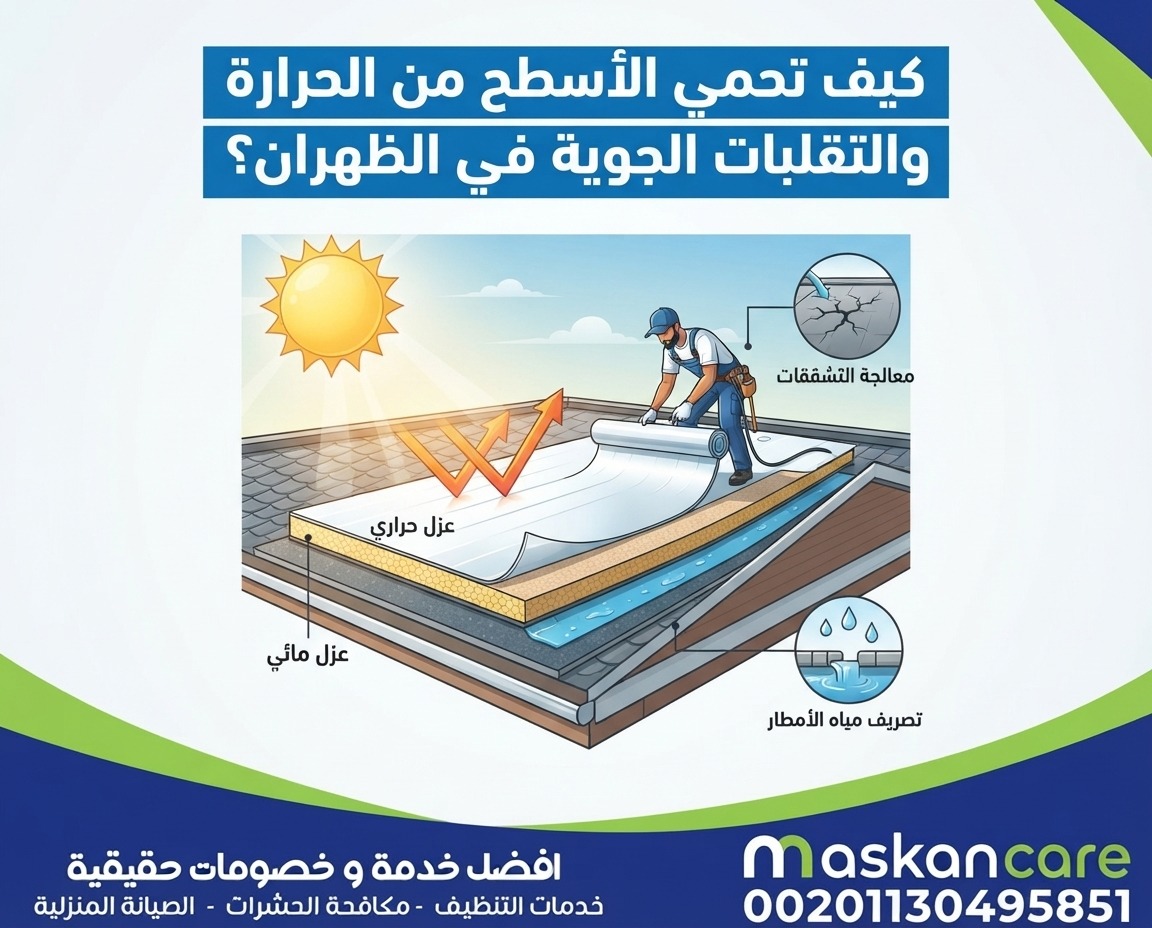
The issue can be more noticeable with elevated tanks that remain exposed to sunlight for most of the day. In such cases, the tank may require thermal insulation in addition to waterproofing, depending on the tank type, location, and overall condition.
For this reason, it is better not to wait until a major problem appears. The insulation should be inspected when changes in its condition, visible cracks, or peeling become noticeable.
Tank Cracks and Their Effect on the Insulation Layer
One of the important causes of water tank insulation damage is the appearance of cracks in the tank structure itself.
Some cracks may initially be small and may not cause obvious leakage. However, continuous water pressure or temperature changes can cause these cracks to expand over time.
When insulation is applied over a cracked surface without properly treating the cracks first, the problem may return after a short period. The new insulation layer can be affected by movement or by the existing crack underneath it.
Therefore, when re-insulating a water tank, the walls, floor, corners, and areas where the tank connects with pipes should be inspected first. Any existing defects should be treated before applying the new insulation material.
Using Unsuitable Insulation Materials
Not every insulation material is suitable for every type of water tank.
The type of material and installation method should match the tank type, location, surface condition, and purpose of the insulation. There is also a difference between waterproofing, which aims to reduce water leakage, and thermal insulation, which aims to reduce the effect of external heat on the tank.
Some mistakes that may lead to insulation damage include using a material that does not match the tank surface, applying it in a way that does not follow the material requirements, or failing to allow enough time for the material to dry and properly bond.
Therefore, insulation quality depends on more than simply choosing a specific material. Surface preparation, application methods, and following the appropriate installation stages all play an important role in the final result.
Poor Tank Preparation Before Insulation
One of the causes of water tank insulation damage that may be overlooked is poor preparation of the tank before insulation work begins.
The surface where the insulation material will be applied needs to be properly prepared. It should be free from dust, dirt, grease, deposits, and weak sections that could affect the adhesion of the insulation.
If insulation is applied over an improperly prepared surface, the layer may eventually start separating or peeling in certain areas.
For this reason, tank preparation is an essential stage of the insulation process and should not be skipped simply to reduce the time required to complete the service.

The Effect of Moisture and Water Leakage on Insulation
Continuous moisture can affect certain insulation systems, especially when there is an existing problem inside or around the tank.
For underground water tanks, it may be necessary to pay attention to moisture surrounding the tank. Water leaking from outside into the tank structure, or from the tank into the surrounding soil, can gradually lead to additional problems.
Some signs may appear as moisture stains, deposits, or changes in the appearance of the walls. In some cases, the source of the leakage may not be immediately visible.
Therefore, inspecting the tank before re-insulation helps determine whether the problem is actually in the insulation layer, the tank structure, or the connection points.
Continuous Water Pressure Inside the Tank
A water tank is continuously exposed to the pressure of the water stored inside it. This pressure increases depending on the water level and the overall size of the tank.
If the tank structure already has weak areas, cracks, or old defects, continuous water pressure can place additional stress on these areas.
This does not mean that water pressure alone causes insulation damage, but it can increase the effect of existing structural problems, especially when the insulation is old or was installed incorrectly.
For this reason, any leakage should not automatically be treated as an insulation problem before the tank structure itself has been inspected.
Insulation Installation Mistakes
Insulation can remain effective for a long period when it is installed correctly using suitable materials. On the other hand, problems may appear much earlier when installation mistakes are made.
Examples include:
-
Failure to clean and prepare the surface.
-
Failure to treat cracks before insulation.
-
Applying the insulation layer at an unsuitable thickness.
-
Neglecting corners and connection areas.
-
Using a material that is unsuitable for the tank type.
-
Not allowing sufficient drying time.
-
Applying insulation without checking the overall tank condition.
For this reason, installation quality is one of the most important factors determining how long the insulation can remain effective.
Neglecting Regular Water Tank Maintenance
Even high-quality insulation needs to be monitored from time to time.
Neglecting inspections can allow a minor problem to continue unnoticed until it develops into more serious damage. Early warning signs may include changes in the color or condition of the insulation, moisture, unexplained water-level reduction, or visible cracks.
Regular maintenance and inspection of the insulation layer are particularly important when the tank has been in use for a long period or is exposed to demanding environmental conditions.
It is therefore better to make tank maintenance part of regular property maintenance rather than waiting until obvious leakage occurs.

Signs of Damaged Water Tank Insulation
Water tank insulation damage may not always be obvious at first. However, there are several signs that can indicate a potential problem.
Some of the most important signs include:
● Cracks or peeling in the insulation layer.
● Moisture around the tank or nearby areas.
● Unusual reduction in the water level.
● Stains or deposits appearing on the tank walls.
● Visible water leakage from the tank.
● Unusual odors related to tank cleanliness or possible contamination.
● Visible signs of damage on the outside of the tank.
● Increased water consumption without an obvious reason.
● Repeated leakage after previous repairs.
If more than one of these signs appears, it is better to have the tank inspected instead of simply covering the visible damaged area.
When Does a Water Tank in Al Ahsa Need Re-Insulation?
There is no single fixed period that applies to every water tank, because insulation lifespan depends on the material used, installation quality, tank location, surrounding conditions, and usage.
However, there are situations where inspecting and restoring the insulation becomes important, including:
-
Visible water leakage.
-
Cracks in the insulation layer.
-
Peeling or separation of the insulation material.
-
Repeated repairs without solving the underlying problem.
-
Old insulation showing clear signs of deterioration.
-
Continuous moisture around the tank.
-
An elevated tank exposed to direct sunlight for long periods without suitable protection.
-
Maintenance or repair work carried out on the tank structure.
In some cases, it may be better to completely remove the damaged old insulation, prepare and repair the surface, and then install a new insulation system instead of applying new material over a weak existing layer.
Underground Water Tank Insulation in Al Ahsa
Underground tanks have different insulation requirements compared with elevated tanks because they are surrounded by soil and exposed to different conditions.
When leakage occurs, the inspection should not be limited to the internal wall. The overall condition of the tank should be assessed, including the areas where the walls meet the floor, pipes, and water inlet and outlet points.
Continuous moisture around an underground tank may also be a sign that requires inspection, especially when it appears together with cracks, deposits, or a reduction in the water level.
Therefore, underground water tank insulation should be based on the actual condition of the tank rather than using one insulation material for every situation.
Elevated Water Tank Insulation in Al Ahsa
Elevated water tanks are more exposed to direct sunlight and outdoor conditions. Therefore, thermal insulation in addition to waterproofing may be appropriate depending on the tank type and location.
High temperatures can affect the tank and the materials surrounding it. Increased water temperature can also become an inconvenience for homeowners, particularly during the summer.
For this reason, the tank structure and existing insulation layers should be inspected to determine whether the problem requires waterproofing, thermal insulation, or a combination of both.
Steps for Inspecting and Treating Damaged Water Tank Insulation
A proper insulation service begins by understanding the problem before starting the actual insulation work. The process can include several steps:
● Initial Inspection: Inspecting the tank condition and identifying visible signs of damage.
● Identifying the Cause: Determining whether the problem is caused by cracks, leakage, damaged insulation, or an issue with another part of the tank.
● Tank Preparation: Cleaning and preparing the surface and removing weak sections according to the tank condition.
● Crack Treatment: Repairing damaged areas before applying the insulation.
● Selecting the Appropriate Insulation System: Choosing the suitable material and application method according to the tank type and condition.
● Insulation Application: Applying the insulation layers using the appropriate installation method.
● Final Inspection: Checking that the required areas have been properly covered and that no visible damaged sections remain.
● Condition Testing: Reviewing the tank after completion to ensure that the problem has been addressed appropriately.
These steps help prevent the installation of new insulation over an old problem that has not been properly treated.
The Importance of Proper Water Tank Insulation
Proper insulation is not limited to preventing water leakage. It can also help protect the tank and maintain its condition for a longer period.
Some of the main benefits of proper tank insulation include:
● Reducing water leakage.
● Protecting the tank structure from moisture.
● Reducing the possibility of worsening existing cracks.
● Helping maintain the tank in better condition.
● Reducing the likelihood of recurring leakage problems.
● Protecting surrounding areas from moisture damage.
● Helping reduce water waste caused by leakage.
Proper insulation becomes especially important when the tank is old, exposed to outdoor conditions, or already showing visible signs of deterioration.

Tips for Maintaining Water Tank Insulation in Al Ahsa
After insulation work is completed, several practices can help maintain the tank and reduce the possibility of future problems:
● Conduct regular tank inspections.
● Do not ignore even minor leakage.
● Monitor the condition of the insulation layer from time to time.
● Clean the tank when necessary.
● Make sure the tank cover is in good condition and properly closed.
● Avoid making random modifications to the tank after insulation.
● Treat any new cracks at an early stage.
● Consider thermal insulation for elevated tanks when needed.
● Consult a specialized technician when a problem keeps recurring.
The most important point is not to wait for major leakage to appear. Detecting a problem at an early stage usually makes it easier to address than allowing it to develop further.
Water Tank Insulation Prices in Al Ahsa
There is no single fixed price that applies to every water tank because insulation costs vary according to the tank size, type, condition, required insulation system, and the amount of preparation needed before applying the new insulation.
Factors that may affect the cost include:
-
Tank size.
-
Tank type.
-
Whether the tank is underground or elevated.
-
Condition of the existing insulation.
-
Presence of cracks or leakage.
-
Need to remove old insulation.
-
Type of insulation material used.
-
Whether waterproofing, thermal insulation, or both are required.
-
Accessibility of the tank.
Therefore, inspecting the tank or understanding its specific details helps determine the appropriate service instead of relying on one fixed price for every case.
Why Choose MaskanCare for Water Tank Insulation in Al Ahsa?
When a water tank insulation problem appears, the goal should not simply be to apply a new layer. The main objective is to understand why the insulation was damaged and address the underlying cause appropriately.
MaskanCare focuses on handling each tank according to its actual condition, starting with inspection and identifying the problem, followed by surface preparation, insulation application, and final inspection.
Depending on the tank condition, the service can include:
● Inspecting the existing insulation.
● Identifying damaged and cracked areas.
● Treating existing problems before insulation.
● Applying the appropriate insulation system.
● Handling both underground and elevated water tanks.
● Providing waterproofing and thermal insulation solutions according to the tank condition.

Book Water Tank Insulation Service in Al Ahsa
If you notice leakage, cracks, or damage in your water tank insulation, it is better not to delay inspection, especially if the problem continues to return after previous repairs.
You can contact MaskanCare to ask about water tank inspection and insulation services in Al Ahsa and explain the tank condition before starting the work.
Phone: 00201130495851
WhatsApp: +00201130495851
You can also provide details about the tank type and send photos of the problem when possible. This can help provide an initial understanding of the condition and the service that may be required.