How to clean swimming pools from dust 00201130495851 خدمة سريعة وبأرخص الأسعار
Dust enters the pool with wind, storms, or by leaving the cover open, and can turn from simple surface debris into cloudiness and sediment at the bottom if not cleaned properly. Therefore, knowing how to clean pools of dust helps you deal with dirt without spreading it back into the water.
What Is the Best Way to Clean Dust From Swimming Pools?
The best way to clean dust from swimming pools depends more on following the correct cleaning sequence than on relying on a single cleaning product. The process starts by removing floating debris, followed by cleaning the waterline and walls, and then slowly vacuuming the dirt from the pool so that the sediment does not spread back into the water.
After that, the filter plays an important role in capturing the fine particles that remain suspended in the water. Dust does not always collect in one place. Some particles may float on the surface, while others settle on the bottom or stick to the walls.
For this reason, simply looking at the clarity of the water surface is not enough. Cleaning pool floors from dirt may require a suitable vacuum or suction head, especially when sand or dust has accumulated after windy weather.
Proper cleaning reduces pressure on the filter and pump and helps prevent the water from becoming cloudy again only a few hours later. Therefore, it is important to distinguish between removing dust from pool water, cleaning the pool floor, running the filtration system, and testing the water to make sure the issue has not developed into a chemical balance or sanitation problem.
Benefits of Understanding How to Clean Dust From Swimming Pools
The following table highlights the practical benefits of understanding the proper way to clean dust from swimming pools, from preparing the right equipment and vacuuming the pool floor to running the filter and testing the water. It explains how each step helps reduce sediment and prevent cloudiness from returning, while emphasizing the importance of choosing the correct brush, cleaning the filter, adjusting chlorine levels, and avoiding mistakes that may increase dust or affect water clarity after strong winds and dust storms.
|
Benefit |
Explanatio |
|
Reducing sediment spread |
Organizing the cleaning steps prevents dust from being stirred back into the water, especially when vacuuming the bottom after windy weather. |
|
Better pool floor cleaning |
Using a vacuum head helps remove heavy dirt that the filter cannot collect on its own. |
|
Protecting the pool surface |
Choosing the correct brush for the pool material reduces scratches and fading, especially with fiberglass and vinyl pools. |
|
Improving filter performance |
Cleaning the filter or performing a backwash when necessary helps reduce the return of cloudy water after operation. |
|
Balancing the water after cleaning |
Testing chlorine and pH shows whether the water needs additional sanitation or chemical balancing after dust removal. |
|
Handling dust storms |
Following specific cleaning steps after a dust storm reduces the accumulation of dust on the pool floor, walls, and waterline. |
|
Avoiding cleaning mistakes |
Avoiding soap inside the pool and never mixing chlorine with other cleaning products helps maintain water quality and proper filtration. |
|
Knowing when professional help is needed |
Persistent cloudiness or poor filtration after cleaning indicates that a deeper inspection may be necessary instead of repeating the same steps. |
|
Reducing chemical consumption |
Removing dust and sediment first reduces the need to rely on chlorine and cleaning products to solve a problem caused mainly by dirt. |

Essential Tools for Cleaning Dust From a Swimming Pool
Before starting to clean a pool from dust, prepare the appropriate tools so that the work does not stop after removing only part of the dirt. The right equipment helps prevent dust from spreading back into the water, especially in small and medium-sized residential pools.
-
Pool skimmer net: Removes leaves and floating dust before they sink to the bottom. It is especially useful at the beginning of the cleaning process.
-
Wall and floor brush: Loosens attached dirt and light algae. The brush should be suitable for the pool material to avoid scratching the surface.
-
Pool vacuum or suction head: Helps remove settled dust from the bottom instead of stirring it back into the water, especially when cleaning the pool floor from dirt.
-
Clean filter or undamaged cartridge: Captures fine particles after vacuuming and improves water circulation during filtration.
-
Test strips or water testing kit: Used to check chlorine and pH levels after cleaning.
-
Protective gloves and goggles: Important when handling ready-made pool cleaners or chemicals, especially during sanitation or chlorine adjustment.
How Does Dust and Dirt Accumulate Inside a Swimming Pool?
Dust enters swimming pools through wind, dust storms, leaving the pool uncovered for long periods, or placing the pool in an exposed area. At first, debris may appear on the surface of the water. Once the water becomes calmer, the dust begins settling at the bottom, which is why understanding the best way to clean dust from swimming pools is important.
Dirt accumulation becomes worse when the filter is full, the skimmer basket is dirty, or the pump has weak suction. Under these conditions, the circulation system cannot capture fine particles efficiently, turning a simple dust problem into cloudy water and sediment that may require pool cleaning with the filter combined with slow vacuuming of the bottom.
If the problem returns shortly after cleaning, there may be another cause, such as not using a pool cover, weak filtration, neglecting the pool floor, or failing to check chlorine and pH levels after a dust storm.
Therefore, cleaning only the surface is not enough when considering how to clean a pool from dust. You also need to understand the cause of cloudy pool water after dust exposure so that the dirt and sediment do not return shortly after cleaning.
Step-by-Step Method for Cleaning Dust From Swimming Pools
Begin by stopping swimming activities while cleaning, then follow an organized sequence that prevents dirt from being redistributed throughout the water. This method is suitable for most situations involving dust after a light dust storm or daily accumulation on the surface and bottom.
-
Prepare the equipment: Make sure the skimmer net, brush, vacuum head, and filter are ready before starting.
-
Remove floating dirt: Use the surface net to collect dust and leaves before they sink to the bottom and become harder to remove.
-
Clean the walls and waterline: Use a brush suitable for the pool surface to loosen attached dust without scratching the material or spreading the dirt throughout the water.
-
Vacuum the bottom slowly: Move the vacuum head gradually so that fine sediment is not disturbed. Vacuuming pool dust requires steady and slow movement.
-
Run the filtration system: Allow the filtration system to operate after vacuuming so it can capture fine particles and help restore water clarity.
-
Test the water: Check pH and chlorine levels after cleaning to determine whether additional adjustment is needed.
How Do I Clean a Swimming Pool?
The best way to clean dust from swimming pools starts with removing floating debris, followed by cleaning the walls, vacuuming the bottom, and running the filter.
Cleaning Pool Floors From Dirt With a Vacuum
Dust and dirt commonly settle on the bottom of the pool once water movement becomes calm. Therefore, cleaning only the surface is not enough when dealing with accumulated dirt. Cleaning the pool floor from dirt helps remove sand and settled dust instead of allowing it to move around every time the pool is used or the pump operates.
Pool vacuuming involves moving the suction head slowly across the floor. Fast movements can lift fine sediment and redistribute it throughout the water. It is preferable to start from the cleaner side and gradually move toward areas where dirt has visibly accumulated. Avoid aggressive scrubbing if the surface is fiberglass or vinyl.
When there is a large amount of sand, vacuuming dust from the pool becomes more important than simply running the filter. The filter can capture suspended particles, but it may not efficiently remove heavy sediment from the bottom. After vacuuming, run the filtration system and monitor water clarity for several hours.
How Can Dead Algae Be Removed From the Bottom of a Swimming Pool Without a Vacuum?
Dead algae can be loosened with a soft brush, but cleaning pool floors from dust and dirt generally requires manual suction or a suitable vacuum head.
How to Clean a Swimming Pool From Dust Using the Filter and Backwash
The filter becomes especially important after removing large debris and vacuuming the bottom because it helps capture fine particles that remain suspended in the water. Cleaning a swimming pool from dust with a filter does not mean that the filter alone is sufficient. It works as an additional stage after cleaning the surface, walls, and floor.
For sand filters, you may need to follow the pool filter backwash procedure when water flow becomes weaker or the filter pressure rises above its normal level. Backwashing removes trapped dirt from the filter media, but it does not replace cleaning the skimmer basket or vacuuming heavy sediment from the pool floor.
Cleaning the pool filter helps prevent cloudiness from returning several hours after cleaning, particularly following dust storms or periods of heavy pool use. After backwashing, return the filter to its normal operating setting and monitor the water clarity before adding any additional chemicals.
If weak filtration or repeated cloudiness is related to the pump or operating system in Al Ahsa, you may need a swimming pool cleaning and maintenance company in Al Ahsa to inspect the filter and clean the pool properly.

How to Use Pool Chlorine After Cleaning
Chlorine is not used to remove dirt from the bottom of the pool, but it helps maintain the water and reduce algae growth and unpleasant odors after cleaning. Therefore, the proper way to use pool chlorine is to add it after removing visible debris, cleaning the walls, vacuuming the bottom, and running the filter.
Before adding chlorine, test the water using test strips or a water testing kit. Adjusting chlorine alone is not enough if the pH level is outside the appropriate range. Testing pool chlorine levels along with checking pH helps determine whether the water needs minor adjustment or whether the cloudiness is mainly caused by dust or poor filtration.
When using chlorine, always follow the product instructions and never mix chlorine with acids or other cleaning products. After adding chlorine, allow the filtration system to run for an appropriate period and test the pool water again before swimming to make sure the water is properly balanced and safe.
Does Chlorine Kill Algae?
Chlorine helps control algae, but it does not replace cleaning the pool floor from dirt or brushing the walls when visible deposits are present.
What Gets Rid of Algae Quickly?
The fastest approach is to brush the affected areas, adjust the chlorine level, and then run the pool filtration system to help remove suspended particles.
Treating Cloudy Pool Water After Dust
Cloudiness occurs when fine particles remain suspended in the water after dust or sand enters the pool. The problem may become worse when the filter is dirty or the bottom has not been vacuumed properly. Therefore, treating cloudy pool water starts with determining whether the cause is suspended dirt, poor filtration, or an imbalance in the water chemistry.
When pool water becomes cloudy after windy weather, begin by removing floating debris. Then clean the walls and waterline before slowly vacuuming the bottom. If the water remains cloudy after filtration, the filter may need cleaning or backwashing before any additional chemicals are added.
The cause of cloudy pool water may also be related to low chlorine levels or an incorrect pH balance after a dust storm. Therefore, the water should be tested after cleaning because clear pool water depends on proper filtration, sanitation, and pH balance together.
If cloudiness continues or filtration remains weak in Qatif despite vacuuming and filter cleaning, you can contact a swimming pool cleaning and maintenance company in Qatif for a more detailed inspection and cleaning service.
What Causes Algae to Appear in a Swimming Pool?
Algae commonly appears because of low chlorine levels, insufficient filtration, and accumulated dust. It can also contribute to cloudy pool water after dust if the floor and walls have not been cleaned properly.
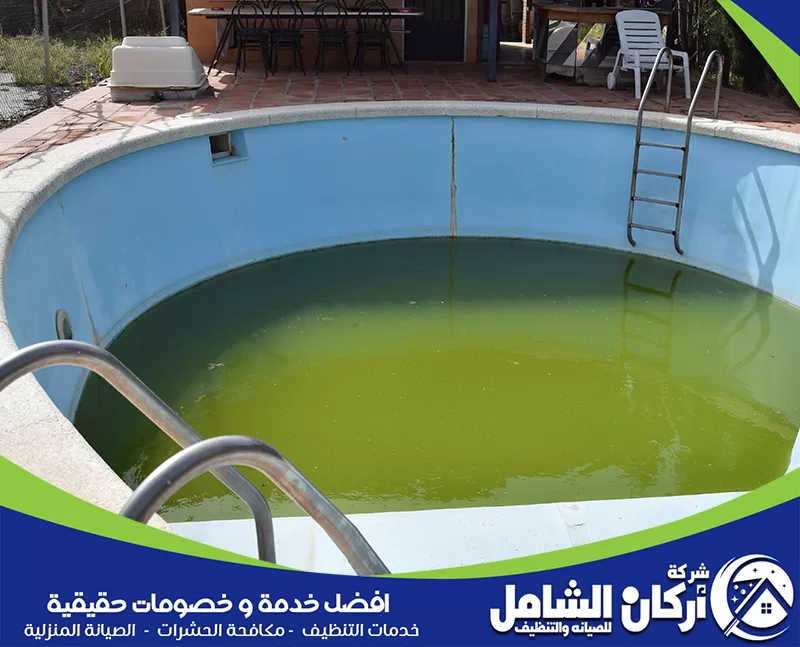
Cloudy pool water showing the importance of cleaning the floor and filter after dust accumulation.
Cleaning a Swimming Pool After a Dust Storm
The best way to clean a swimming pool from dust after a dust storm requires more careful organization than routine cleaning because a large amount of dust can reach the surface, walls, and bottom within a short period.
Start by removing leaves and floating debris with a skimmer net. Then allow the water to settle for a while so heavier dirt can sink to the bottom instead of being stirred up during cleaning. Once the water has settled, vacuum the dust from the pool slowly using an appropriate suction head. Avoid fast movements that could redistribute the dirt throughout the water.
Next, clean the walls and waterline using a brush appropriate for the pool material. Dust carried by strong winds can stick to the edges and create a thin layer that may not be obvious when looking only at the surface.
After vacuuming, run the filter and check the skimmer basket. Then test chlorine and pH levels. If the water remains cloudy after a complete filtration cycle, the cause of cloudy pool water after dust may be poor filtration or chemical imbalance rather than dust alone.
If dust repeatedly accumulates after windy weather in Dammam, you can contact a swimming pool cleaning company in Dammam for deeper cleaning of the floor, walls, and filter without spreading sediment throughout the water.
Pool Types and How Their Dust-Cleaning Methods Differ
Not all swimming pools are made from the same materials, so the pool cleaning method should be adapted to the type of surface and its resistance to brushes and cleaning products. Using the same tools on every type of pool may cause scratches, fading, or excessive foam, especially when cleaning residential pools after dust exposure.
-
Concrete or tiled pools: These can generally tolerate stronger brushes. The waterline and light deposits can be cleaned with suitable products followed by thorough rinsing, but excessive pressure should be avoided on weak or damaged tiles.
-
Fiberglass or vinyl pools: These require a soft brush and non-abrasive products because aggressive scrubbing may damage the surface layer or liner.
-
Plastic or inflatable pools: Mild soap and warm water are suitable after draining the pool, along with a soft sponge and thorough drying before refilling.
For buried or fiberglass pools, if moisture appears around the pool structure or the water level repeatedly drops, you may need a water leak detection company in Qatif before repeating the cleaning process.
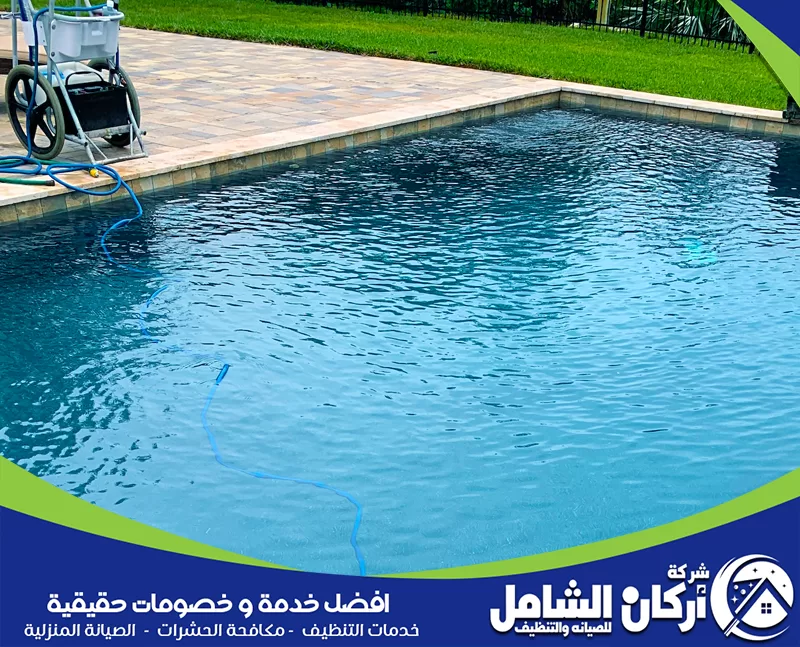
Pool cleaning equipment helps remove dust and improve water clarity.
Difference Between Cleaning a Pool With Household Materials and Ready-Made Pool Cleaners
The following table compares suitable materials for cleaning swimming pools from dust according to the surface type and level of contamination. Brushing and vacuuming remain the foundation, while household or specialized products may be used when necessary to clean the waterline or adjust water balance.
|
Material |
When Is It Suitable? |
Main Benefits |
When Should It Be Avoided? |
|
Diluted vinegar |
For the waterline and light scale after lowering the water level, or on some external metal components |
Easily available and useful for localized cleaning |
Do not add it randomly to pool water or use it as a substitute for proper chemical treatment |
|
Baking soda |
When alkalinity is low or for light localized cleaning of some deposits |
Can help raise alkalinity and stabilize water balance |
Do not use it randomly if alkalinity is already high |
|
Mild soap and warm water |
For drained plastic pools, covers, and pool toys |
Suitable for soft surfaces and inexpensive |
Not suitable for filled permanent pools because it creates foam |
|
Specialized pool cleaners |
For waterlines, scale, or sanitation according to product instructions |
More specialized when the correct product is selected |
Never mix with chlorine, acids, or other cleaning products |
Some ready-made pool cleaners may cost more, but they can be safer than experimenting with an unsuitable substance on a sensitive surface.

Does Vinegar Kill Algae?
Vinegar should not be relied on to treat pool algae. It may be useful for localized cleaning but does not replace the correct method of cleaning a pool from dust.
Effects of Leaving Dust in a Swimming Pool Without Cleaning
Leaving dust in the pool does not only affect its appearance. It can cause cloudy water and visible deposits on the bottom and waterline. Over time, cleaning the pool from debris becomes more difficult because dust can mix with oils, leaves, and light algae, requiring more precise vacuuming instead of simply cleaning the surface.
Accumulated dirt also increases the load on the filter and pump, particularly when the skimmer basket is full or the filter cartridge is dirty. In such cases, filtration alone is not enough because cleaning the pool floor from dirt may require a vacuum or suitable suction head before the filter is operated, especially when sand or fine sediment is present.
Persistent cloudiness after cleaning may indicate that the problem is no longer related to dust alone. It could be caused by poor filtration or an imbalance in chlorine and pH. Therefore, testing pool water after cleaning is important to determine the actual cause of cloudy water before adding more chemicals or repeatedly vacuuming without inspection.
If cloudiness is accompanied by moisture around the pool or repeated drops in water level in Al Ahsa, the situation may require a more detailed inspection from a water leak detection company in Al Ahsa.
Is Pool Algae Dangerous?
Algae can make the pool floor slippery and increase water cloudiness, so it should be addressed early along with vacuuming dust from the pool.
Common Mistakes When Cleaning Dust From a Swimming Pool
Many problems with cloudy pool water are not caused by dust itself but by the way the dust is handled. Avoiding common mistakes improves the results of cleaning a swimming pool from sand and dust and reduces the need to repeat vacuuming only a few hours later.
-
Scrubbing too quickly or aggressively: This stirs fine sediment into the water and makes vacuuming less effective, especially when light dust has settled on the bottom.
-
Using soap inside a filled permanent pool: Soap creates foam and can negatively affect water quality and filtration.
-
Mixing chlorine with other cleaners: This can cause a dangerous chemical reaction. Chlorine should never be mixed with acids or other cleaning products.
-
Draining a permanent pool as the first solution: This may be inappropriate, especially for fiberglass or buried pools, and is usually unnecessary for ordinary dust accumulation.
-
Using high water pressure on a weak surface: Strong pressure may damage loose tiles or worn surfaces, so always test the method on a small area first.
-
Ignoring the skimmer basket and filter: Water clarity may remain poor even after vacuuming if the filtration system is not working efficiently.
-
Returning to swimming immediately: It is better to wait until filtration has stabilized and the water has been tested, especially after using chemicals or adjusting chlorine levels.
Does Dishwashing Liquid Remove Pool Algae?
No. Dishwashing liquid can create foam in the water and interfere with filtration, potentially increasing the need for proper pool filtration rather than solving the algae problem.
Practical Tips to Prevent Dust and Cloudiness From Returning to the Pool
Preventing the problem is easier than dealing with heavy accumulation afterward. Prevention does not require exhausting daily cleaning. Instead, a few simple steps can help maintain clear water and reduce the recurrence of cloudy pool water after dust.
-
Use a skimmer after dusty days: Remove floating debris before it sinks to the bottom and requires slower vacuuming.
-
Keep the skimmer and filter clean: Poor suction can cause the problem to return quickly even after cleaning the pool filter and running the filtration system.
-
Check pH and chlorine after cleaning: Do not wait until the water changes color before checking its chemical balance.
-
Cover the pool when not in use: A pool cover reduces the amount of dust and leaves entering the water, especially during windy weather and dust storms.
-
Clean the waterline weekly: This prevents dust and oils from becoming a difficult layer on the pool edges and walls.
-
Use a brush suitable for the pool material: Do not use the same aggressive brush on tile, fiberglass, and vinyl surfaces.
For villas with pools, gardens, or outdoor seating areas, maintaining overall cleanliness through a professional villa cleaning company in Dammam can also help reduce the amount of dust that reaches the pool area.

Swimming Pool Dust-Cleaning Stages
The following table explains the stages of cleaning a swimming pool from dust in the correct order, from removing floating debris to testing the water. This sequence helps clarify the role of the skimmer, brush, vacuum, and filtration system in reducing sediment and preventing cloudiness from returning.
|
Stage |
What Is Done |
Important Note |
|
Surface cleaning |
Use the skimmer net to collect dust and leaves |
Complete this before debris sinks to the bottom |
|
Wall cleaning |
Brush the waterline and walls with a suitable brush |
The correct brush depends on the pool material |
|
Bottom vacuuming |
Slowly remove sediment with a vacuum head |
Fast movement can redistribute dust |
|
Filtration |
Allow the filter to capture fine particles |
The filter should be clean and functioning properly |
|
Water testing |
Check chlorine and pH levels |
Perform testing after cleaning or following dust storms |
|
Prevention |
Use a pool cover and clean the skimmer regularly |
Helps prevent dust from returning quickly |
When Should You Contact a Professional?
Home cleaning methods are generally suitable when the dust is recent, the filter is working properly, and the water can still be restored to a clear condition. However, if the pool water remains cloudy after a complete filtration cycle or sediment quickly returns after vacuuming, the issue may be more serious than the usual method of cleaning dust from swimming pools.
Professional assistance is recommended when slippery algae appears on the walls, thick scale develops along the waterline, or there is an obvious problem with the pump or filter. Some situations require swimming pool maintenance rather than basic cleaning, especially when cloudiness continues despite cleaning the pool filter and running the filtration system correctly.
For concrete or buried fiberglass pools, draining the water should not be treated as a routine household decision. Incorrect draining may affect the structure or liner.
Indoor swimming pools also require better ventilation and additional precautions when using chemicals. Therefore, contacting a professional swimming pool maintenance company is advisable when there is a problem with the filter, pump, or circulation system.
When dealing with pool water after cleaning, visual clarity alone is not enough. Understanding the role of water chlorination helps explain the importance of sanitation alongside vacuuming, filtration, and proper pH balance.