Methods for cleaning dirty sofas 00201130495851 خدمة سريعة وبأرخص الأسعار
Discover the best ways to clean dirty sofas based on fabric type, and learn how to clean fabric, leather, velvet, suede, and velour sofas, along with the most important materials and tools used to remove stains and odors without damaging the material. This practical guide from Maskancare will help you choose the right cleaning method and keep your sofa clean for as long as possible.
What Is Cleaning Dirty Sofas?
Cleaning a dirty sofa means dealing with dust, stains, and unpleasant odors found on the sofa surface and within some of its fibers, while taking the material type into account so that the cleaning process itself does not cause damage. The process is not limited to removing a visible stain; it also includes understanding the source of the dirt, how moisture is absorbed, and how the surface should be dried afterward.
The cleaning method varies depending on the sofa material. Fabric sofas may sometimes be cleaned with lukewarm water and mild soap, while leather requires a dedicated cleaner and suitable conditioning. Velvet, suede, and similar delicate materials require gentle pressure and significantly reduced moisture to prevent changes in the direction of the fibers or the texture.
Methods for Cleaning Stains from Velvet Sofas
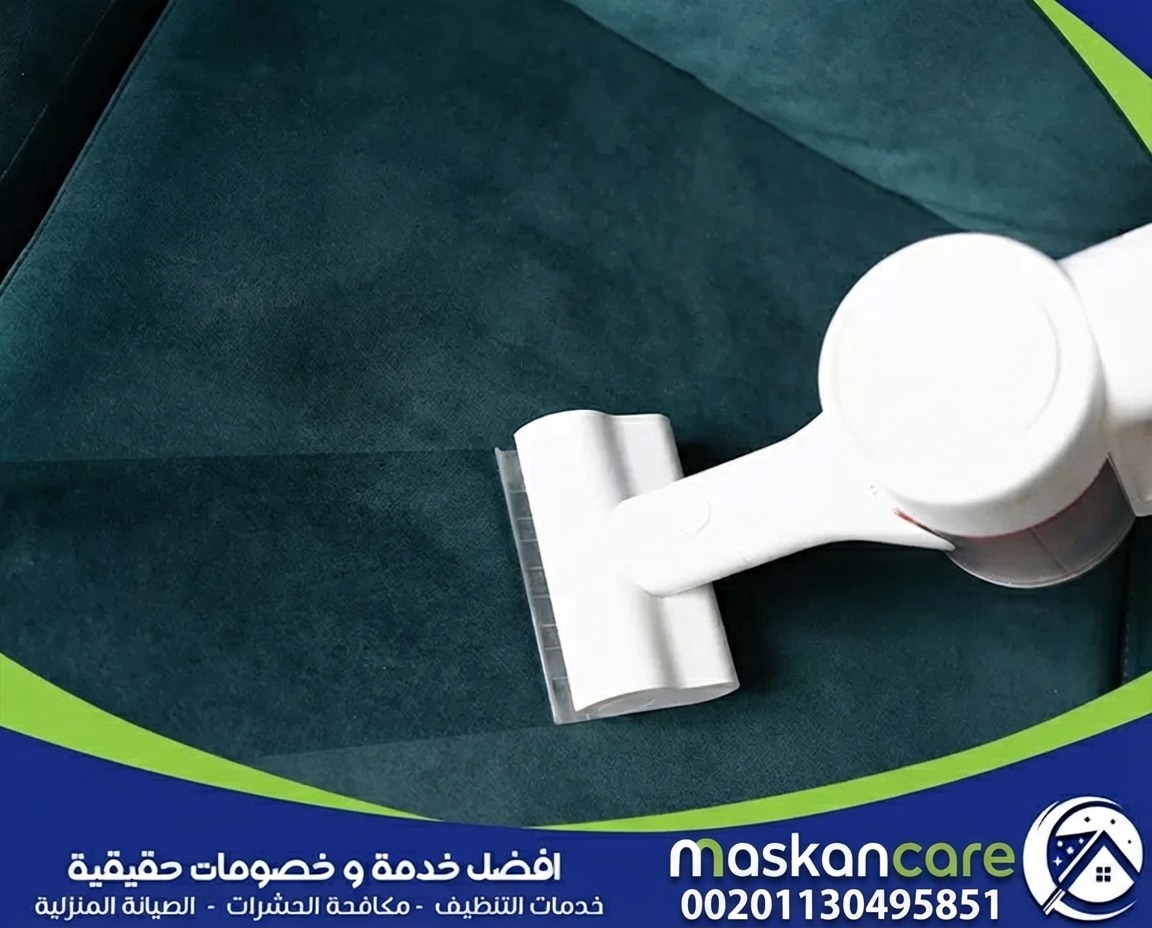
Cleaning stains from velvet sofas requires careful handling because the fabric has visible fibers that can change appearance when exposed to excessive rubbing or too much water. We begin by removing dust with a sofa cleaning vacuum so that dirt does not mix with moisture and become a deeper stain. A sofa cleaning brush is then gently passed in one direction to maintain the appearance of the fabric.
When there is a beverage or food stain, we use a clean cloth with a small amount of suitable sofa cleaner, applying gentle pressure instead of rubbing. In cases of very dirty sofas, a sofa cleaning device or sofa cleaning machine can be used, provided that the amount of steam and moisture is properly controlled so that the velvet texture is not affected.
Some customers also request steam cleaning for velvet sofas. In this case, a hidden area is tested first before using the sofa cleaning machine on the entire surface. The role of a sofa cleaning company is to choose a method that removes the stain while preserving the velvet's color and texture.
After learning the methods for cleaning dirty sofas, you can also visit The Best Way to Clean Sofas to identify the most suitable steps according to the fabric type and stain condition without relying on random solutions.

Methods for Cleaning Suede Sofas
Suede sofas are among the materials that require the greatest care when cleaning sofas at home because excessive water can leave visible marks and may cause the stain to spread rather than disappear. The first step is to use a sofa cleaning vacuum to remove dust from the surface and gaps, followed by a soft sofa cleaning brush to gently lift the fibers and reveal areas of dirt.
If the stain is fresh, absorb it with a dry tissue without rubbing. After that, a sofa cleaning spray specifically designed for suede can be applied in a small amount and from a suitable distance. Regular sofa cleaners should not be used before confirming that they are suitable for suede, as some products may change the color or leave a visible ring around the stained area.
In cases of very dirty sofas, a sofa cleaning company may use a sofa cleaning device or machine using a low-moisture method, keeping moisture to a minimum. Steam cleaning for suede sofas should also be performed carefully and only after testing the material, because suede cannot tolerate intensive steam in the same way as some other fabrics.
Methods for Cleaning Satin Sofas
Cleaning stains from satin sofas requires a different approach because satin is a smooth fabric whose shine can reveal any water marks or signs of excessive rubbing. We begin by removing dust with a sofa cleaning vacuum equipped with a soft attachment, then identify the type of stain before applying any sofa cleaner.
Liquid stains are treated by gently pressing a white cloth against the area to prevent color transfer. Afterward, a small amount of a suitable sofa cleaning spray can be used. Satin should not be saturated with water because moisture may leave visible waves or marks after drying.
When cleaning very dirty satin sofas, a sofa cleaning machine or sofa cleaning device may be used at a low setting, with moisture extracted quickly and the fabric left to dry in a well-ventilated area. Some cases of steam sofa cleaning may be suitable for satin if the fabric is designed to tolerate heat.
A professional sofa cleaning company focuses on removing the stain while preserving the softness and natural shine of the satin without stressing the fabric. You can contact us through 00201130495851.
Because the cleanliness of seating areas is connected to the cleanliness of the rest of the home, you can also explore How to Clean and Organize the Kitchen for practical steps that help make your home more comfortable and organized.
Manual sofa cleaning using a brush and cleaning spray to remove stains with maskancare
How to Clean Fabric Sofas
The method for cleaning fabric sofas starts with checking the type of fabric before using any product. Fabric sofa cleaning requires different treatment depending on thickness, color, and moisture absorption. First, dust and crumbs are removed using a sofa cleaning vacuum, paying attention to corners, seams, edges, and underneath the cushions so that dust does not turn into stains when the fabric becomes wet.
The sofa cleaning spray is then tested on a hidden area. Stains are treated using gentle movements with a sofa cleaning brush, avoiding aggressive rubbing that could spread the stain or alter the fabric texture. For deep dirt, a sofa cleaning device or sofa cleaning machine can be used to extract water and cleaning solution from the fabric rather than leaving moisture inside the padding.
Therefore, steam sofa cleaning can be suitable for fabric sofas affected by odors or recurring stains, provided that the steam level is adjusted according to the fabric type. Many families also look for a sofa cleaning company when they need professional sofa cleaning that does not weaken colors or leave a strong cleaning-product smell.
How to Clean Leather Sofas
Leather sofa cleaning depends on reducing moisture and using gentle products because leather does not tolerate excessive water or strong cleaning chemicals like some fabrics do. The first step is removing dust with a soft cloth or a sofa cleaning vacuum with a dedicated brush that will not scratch the surface. Light stains can then be wiped with a slightly damp cloth, followed by immediate drying.
For this reason, ordinary sofa cleaning sprays should not be used on leather unless they are specifically designed for leather. Some sprays may leave an unwanted glossy layer or cause dryness and cracking over time. A soft sofa cleaning brush can be used around stitching and corners, but without applying excessive pressure.
For heavy dirt, a sofa cleaning machine is not always suitable for leather unless handled by a professional who understands the required suction and moisture levels. This is why some households choose a sofa cleaning company when they need professional cleaning that maintains the natural appearance, texture, and shine of leather.
Leather sofas also require conditioning after cleaning to prevent the surface from drying out or developing dull patches. Book your service now by calling 00201130495851.
Our services are not limited to explaining sofa cleaning. We also help you connect sofa cleaning with the rest of your household cleaning through a Daily, Weekly, and Monthly House Cleaning Schedule.
Cleaning a leather sofa with a suitable cleaner to maintain its shine and reduce stain marks
Why Do People Search for Ways to Clean Dirty Sofas?
People search for ways to clean dirty sofas because small stains can gradually become visible marks and unpleasant odors that are difficult to remove. Dirt does not always appear all at once. It may begin as light dust, hand oils, or food residue and then become embedded in the fibers and padding when cleaning is delayed.
People also want a safe cleaning method because choosing the wrong product may cause fading, leather cracking, or visible rings after drying. Therefore, it is not enough to search for the best or cheapest cleaner. The most important factor is choosing a product that matches the sofa material and its care instructions.

Steps for Cleaning a Dirty Sofa at Home
Before starting, check the care label or cleaning code if available. Code W generally allows water-based cleaning, S indicates a solvent-based cleaning method, WS allows both options with caution, while X generally means vacuuming or light cleaning without liquids.
-
Start with thorough vacuuming: Clean cushions, corners, and edges with a soft attachment to remove dust before any wet cleaning.
-
Test the cleaner on a hidden area: Allow the spot to dry to make sure there is no change in color or texture.
-
Prepare a mild solution: Use lukewarm water and mild soap only when the care code allows water-based cleaning.
-
Dampen the cloth, not the sofa: Gently clean the stain from the outside toward the center instead of pouring water directly onto the sofa.
-
Absorb moisture immediately: Press a dry cloth against the area to prevent moisture from reaching the padding.
-
Use baking soda when necessary: Apply it after the stain has been removed if a mild odor remains, then vacuum it later.
-
Allow the sofa to air-dry: Provide good ventilation and avoid using the sofa until it is completely dry.
When applying these methods and discovering that the dirt requires more extensive treatment, you can visit Cleaning Company in Dammam to learn about services suitable for complete and organized home cleaning.
Cleaning a leather sofa with a suitable cleaner to reduce stains and maintain its appearance
Types of Sofas and How to Handle Each Material
Different materials require different cleaning methods. There is no single cleaning mixture that works safely for every sofa, even when the stain appears similar on the surface.
-
Fabric sofas: Sofa cleaning should begin by removing dust with a sofa cleaning vacuum, followed by testing a sofa cleaning spray on a hidden area before treating stains.
-
Leather sofas: Excessive water and strong cleaners are unsuitable, so leather should be cleaned with a dedicated product and gentle wiping. Avoid using a sofa cleaning machine randomly.
-
Velvet sofas: They require gentle handling because excessive pressure can alter the appearance of the fibers. A sofa cleaning brush can be used after drying to restore the direction of the pile.
-
Velvet and similar delicate fabrics: When cleaning very dirty velvet sofas, moisture should be minimized. Steam cleaning can be used gently when appropriate for the fabric.
-
Suede sofas: Suede is sensitive to water, so dry cleaning or limited wiping is preferred. Avoid using a sofa cleaning machine if the material cannot tolerate moisture.
-
Sofas with deep stains: The material should be inspected before selecting a cleaning method. Steam sofa cleaning may be suitable for some fabrics but not all.
-
Choosing a sofa cleaning company: Professional assistance helps determine the appropriate cleaning method according to the fabric type and select the correct equipment or spray without damaging the color or texture.
Essential Elements for Cleaning Dirty Sofas
Successful sofa cleaning depends on preparing the appropriate tools before using any cleaning product. This reduces guesswork and prevents excessive moisture or rubbing, especially when dealing with delicate fabrics or extensive stains.
-
Vacuum cleaner with a soft attachment: Removes dust and lint from the surface and corners before wet cleaning.
-
White or microfiber cloths: Prevent color transfer from the cleaning cloth onto the sofa.
-
Very soft brush: Suitable for certain fabrics and velvet when necessary, without aggressive rubbing.
-
Lukewarm water: Used only when the sofa material and care label permit water-based cleaning.
-
Mild soap or fabric shampoo: Suitable for fabrics that allow water-based cleaning.
-
Leather cleaner: Safer than general cleaners when dealing with leather sofas.
-
Baking soda: Can help absorb light odors and surface moisture.
-
Gloves and good ventilation: Important when using ready-made cleaners or strong odor removers.
Because sofa cleaning is part of keeping the entire villa clean, you can also explore Best Villa Cleaning Company in Dammam for suitable services covering seating areas and other spaces.
Sofa Cleaning Materials
-
Diluted vinegar: May be suitable for light stains after testing, but it should not be used on sensitive fabrics or very dirty sofas without confirming compatibility.
-
Baking soda: Helps absorb odors and surface moisture and can then be removed with a sofa cleaning vacuum.
-
Mild soap: Suitable for some water-resistant fabrics and should be used in limited quantities to prevent excessive moisture in the padding.
-
Sofa cleaning spray: Treats small stains when the correct product is selected and tested on a hidden area.
-
Fabric cleaners: Useful for routine sofa cleaning but may not be sufficient for deep stains.
-
Leather cleaners: Designed specifically for leather sofas and help maintain the natural appearance without excessive drying.
-
Sofa cleaning brush: Helps clean seams and corners gently without aggressive rubbing that could weaken the fabric.
-
Sofa cleaning device: Helps apply the cleaning solution and extract moisture from fabric.
-
Sofa cleaning machine: Suitable for deeper cleaning and can be used by a professional sofa cleaning company to reduce residual moisture.
-
Sofa cleaning equipment: Can be used for steam sofa cleaning when deeper treatment is appropriate.
Causes of Dirty Sofas and Stubborn Stains
Sofas become dirty due to the accumulation of dust, sweat, light oils, and food residue inside the fibers and padding over time. As a result, a stain may appear small on the surface while leaving a deeper mark or odor if treatment is delayed.
-
Dust accumulation: Can turn into a more difficult layer when combined with moisture.
-
Oils and sweat: Stick to the fibers and contribute to fading around armrests and edges with repeated use.
-
Food and beverage residue: May leave stains and odors if not absorbed quickly.
-
Delayed stain treatment: Allows liquids to spread deeper into the fabric and padding.
-
Using unsuitable products: May set the stain instead of removing it or leave visible marks after drying.
When you begin applying methods for cleaning dirty sofas and discover that the seating area also needs comprehensive cleaning, you can explore Rest House Cleaning Company in Dammam for organized indoor and outdoor cleaning services.
When Should You Contact a Professional?
Home cleaning methods are not sufficient in every situation. It is better to stop and contact a professional when the sofa has an X cleaning code, when a stain is old and has penetrated deeply into the padding, or when an odor remains after several correct spot-treatment attempts.
Professional intervention is also recommended if mold or deep moisture appears inside the cushions, or if the fabric color transfers to the cleaning cloth during testing. General dirt covering the entire sofa is different from a small stain and may require better control over moisture distribution and extraction.
Careful cleaning of a fabric sofa to remove surface dirt and improve drying
Sofa Cleaning Prices
The following table provides approximate service durations for different sofa cleaning conditions. The final cost may vary depending on the sofa size, fabric type, level of dirt, and required cleaning method:
|
Type of Dirt |
Recommended Method |
Suitable Fabrics |
Approximate Time |
|
Surface dust and dirt |
Deep vacuuming + soft brushing |
Most fabrics |
15–25 minutes |
|
Light beverage stains |
Spot cleaning with neutral cleaner + moisture extraction |
Synthetic suede, treated linen, velvet |
20–35 minutes |
|
Grease and food stains |
Safe degreaser + gentle brushing + extraction |
Synthetic and blended fabrics |
25–40 minutes |
|
Children's stains and milk |
Enzymatic solution + limited rinsing + drying |
Most water-tolerant fabrics |
30–45 minutes |
|
Pet urine stains |
Enzymatic treatment + odor removal + sanitization |
Fabrics suitable for wet extraction |
35–55 minutes |
|
Smoke or moisture odors |
Full cleaning + odor remover + forced ventilation |
According to fabric testing |
45–90 minutes |
|
Darkened armrests and edges |
Limited professional brushing + low-moisture foam |
Thick and blended fabrics |
30–50 minutes |
|
Old general dirt |
Two-stage deep extraction cleaning |
Water-tolerant fabrics |
60–120 minutes |

Practical Tips for Drying Sofas and Preventing Odors from Returning
Drying is just as important as removing the stain. Any remaining moisture inside a cushion or padding may cause the odor to return even when the surface appears dry. Therefore, drying should be considered an essential part of the cleaning process.
-
Open windows and improve ventilation: Moving air helps remove moisture instead of trapping it.
-
Separate removable cushions: This helps speed up drying and prevents moisture from accumulating in one area.
-
Use a dry cloth for pressing: Gentle absorption is better than repeatedly wiping the surface.
-
Do not repeatedly wet the same area unnecessarily: Repeated moisture increases drying time and may reduce the quality of the result.
-
Vacuum lightly after drying: This can help remove remaining powder or loosened fibers.
-
Treat spills immediately: A quick response reduces the need for deep cleaning later.
Common Mistakes When Cleaning Dirty Sofas
Many cleaning problems are caused not by the stain itself but by the way it is treated. Knowing the common mistakes can help prevent damage before you begin.
-
Scrubbing aggressively: This can push the stain deeper and damage the appearance of the fibers.
-
Soaking the sofa with water: Excessive moisture increases drying time and may leave moisture inside the padding.
-
Skipping the hidden-area test: This may cause color fading or texture changes.
-
Using a cleaner that does not match the care code: Water may damage S and X fabrics, while solvents may be unsuitable for other materials.
-
Treating baking soda as an all-purpose cleaner: Its main benefit is absorbing odors rather than removing every type of stain.
-
Using strong cleaners on leather: These can cause dryness or loss of the natural finish.
-
Mixing bleach with another cleaning product: This is a dangerous health hazard, not simply a cleaning mistake.
Summary: What You Should Know About Cleaning Dirty Sofas
The best results when using methods for cleaning dirty sofas come from five basic rules: identify the material first, choose the appropriate cleaning product, test it on a hidden area, minimize moisture as much as possible, and provide proper ventilation and drying before using the sofa again.
The more careful and organized the cleaning process is, the lower the risk of damaging the fabric or leather. For old stains, deep odors, or delicate materials, stopping random cleaning attempts and contacting a professional is often safer than repeatedly using unsuitable products.
Contact Number for Cleaning Dirty Sofas
You can contact us when you need professional application of methods for cleaning dirty sofas instead of experimenting with products that may leave marks on the fabric or cause the stain to spread. Contact us at 00201130495851 and provide details about the sofa condition, fabric type, level of dirt, and whether there are odors or old stains so we can determine the most appropriate cleaning method.
You can also contact us through WhatsApp at +00201130495851 to send photos of the sofa and receive information about the service steps, available appointment times, and expected cost.
We are currently offering a 25% discount on sofa cleaning services for a limited time, with a 6-month service-quality guarantee, subject to usage conditions and the type of sofa material.
You can also follow our social media channels, including Facebook, Instagram, Twitter, and YouTube, to learn more about our services and see examples of sofa cleaning work. Our goal is to provide a safe cleaning solution that suits your sofa rather than relying on random methods that could damage the fabric or padding.