Water Leak Detection in Jeddah – Signs That Help You Detect the Problem Early 00201130495851 خدمة سريعة وبأرخص الأسعار
Learn how to identify early signs of visible and hidden water leaks in Jeddah homes and buildings, understand the common causes of leaks, and discover practical steps that can help reduce water damage and detect problems before they become more serious
Water Leak Detection in Jeddah – Signs That Help You Detect the Problem Early
Water leaks are among the household problems that can begin quietly and become much more expensive when they are ignored. A small damp area on a wall, an unusual increase in the water bill, a musty smell, or paint that suddenly begins to peel may seem unrelated at first. In reality, these signs can sometimes indicate that water is escaping from a pipe, connection, tank, bathroom, kitchen, roof, or another part of the property.
In Jeddah, buildings can be exposed to different conditions that make water leak detection an important part of property maintenance. Homes and commercial buildings may contain complex plumbing networks, bathrooms, kitchens, water tanks, rooftop installations, drainage systems, and air-conditioning-related components. When a leak occurs in a concealed location, finding the exact source can be difficult without proper inspection.
This is why water leak detection in Jeddah should not always wait until water begins collecting visibly on the floor. Some leaks develop behind walls, underneath floors, inside ceilings, or around plumbing connections and may remain unnoticed for a considerable period.
Early detection can help reduce the amount of damage caused by continuous moisture. It can also make it easier to determine whether the problem is related to a plumbing pipe, a fixture, a tank, a roof, or another source.
In this guide, we will discuss the most important signs of water leaks, common places where leaks occur, possible causes, how professional detection works, what homeowners can do before calling a specialist, and practical steps that may help prevent future problems.
Why Is Early Water Leak Detection Important?
A water leak does not always announce itself with a large puddle.
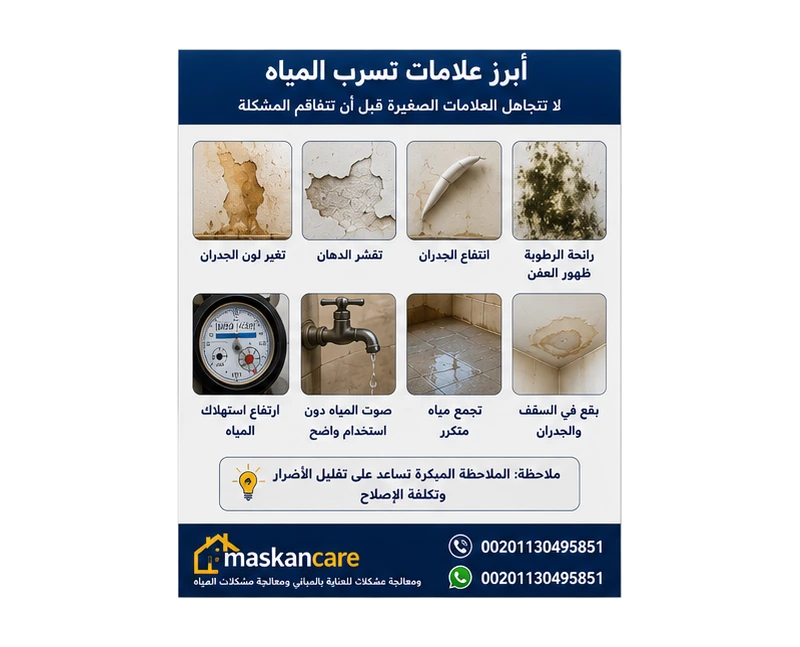
In many cases, the first signs are subtle. You may notice a small stain on the ceiling, a section of paint that has changed color, or a room that smells damp. Sometimes the only noticeable sign is that the water meter continues moving when no taps or appliances are being used.
Ignoring these signs can allow the problem to continue.
A slow leak can gradually increase moisture inside walls or beneath floors. Over time, this may contribute to damaged paint, weakened finishing materials, unpleasant odors, mold growth, or deterioration of parts of the building.
Early detection allows the property owner to investigate the issue while it is still relatively limited.
This does not mean that every stain or damp smell is automatically caused by a plumbing leak. Condensation, poor ventilation, rainwater, drainage problems, and other issues can create similar symptoms. That is why identifying the actual source is important before deciding how to repair the problem.

What Is Water Leak Detection?
Water leak detection is the process of investigating a property to identify whether water is escaping from a plumbing system or another water-related source and, when possible, locating the point where the problem originates.
The visible location of water damage is not necessarily the actual location of the leak.
For example, water leaking from a pipe inside a wall may travel along the internal structure before appearing several centimeters or even farther away from the original source. Similarly, a ceiling stain may be caused by a leak from an upper bathroom, roof, tank, or plumbing connection rather than a problem directly above the stain.
A proper inspection therefore looks beyond the visible symptom.
Depending on the property and the suspected source, an inspection may focus on:
-
Water supply pipes.
-
Bathroom plumbing.
-
Kitchen connections.
-
Water tanks.
-
Roof areas.
-
Ceiling spaces.
-
Floor-level plumbing.
-
Shower areas.
-
Sink connections.
-
Toilet connections.
-
External plumbing.
-
Drainage-related areas.
The objective is to understand what is happening before unnecessary repair work begins.
What Are the Early Signs of a Water Leak?
There are several signs that homeowners should not ignore.
Unexplained Increase in Water Consumption
One of the most useful signs of a possible hidden leak is an unexplained increase in water consumption.
If your daily habits have not changed but your water usage suddenly becomes noticeably higher, there may be a problem somewhere in the plumbing system.
This does not automatically confirm a leak. Water consumption can increase because of guests, irrigation, appliances, or changes in household activity. However, when increased consumption appears without an obvious explanation, it is worth investigating.
Damp Spots on Walls
A damp patch on a wall can be an early warning sign.
The area may feel cooler or slightly wet compared with the surrounding wall. Sometimes the discoloration is very small at first and gradually becomes larger.
Dampness may be caused by a leaking pipe, moisture entering from outside, condensation, or another source. Identifying the source is therefore more important than simply repainting the affected area.
Peeling Paint
Paint that begins to bubble, peel, crack, or change texture can sometimes indicate moisture behind the surface.
If repainting solves the appearance temporarily but the problem returns, there may be an underlying moisture source that has not been addressed.
Repeated paint damage should therefore be investigated rather than treated as a purely cosmetic issue.
Ceiling Stains
Brown, yellow, gray, or irregular stains on ceilings can indicate moisture.
The source could be a plumbing connection from an upper floor, a bathroom, a roof problem, or another water-related issue.
The location of the stain can provide a clue, but it should not automatically be assumed to be the exact leak location.
Musty or Damp Odors
A persistent damp smell can indicate that moisture has remained in a concealed area.
The smell may become more noticeable in closed rooms, bathrooms, storage areas, or spaces with limited ventilation.
If the smell continues even after cleaning and ventilation, checking for a hidden moisture source may be appropriate.
Sounds of Running Water
Hearing water running when all taps and appliances are turned off can be another warning sign.
A faint sound behind a wall or beneath a floor may indicate water movement through a pipe or another part of the plumbing system.
This sign is particularly useful when combined with other symptoms such as increased water consumption or dampness.
Warped Flooring
Floor materials may change shape when exposed to persistent moisture.
You might notice tiles becoming loose, flooring swelling, gaps appearing, or sections of the floor feeling different from the surrounding area.
Water beneath floors can be difficult to locate visually, so repeated changes in flooring deserve attention.

Common Causes of Water Leaks in Jeddah Properties
Water leaks can have many causes, and the cause is not always obvious.
Aging Plumbing Pipes
Older pipes may deteriorate over time.
Corrosion, wear, damaged joints, or weakened materials can eventually lead to leakage.
The age of the plumbing system can therefore be an important factor when evaluating repeated leaks.
Damaged Pipe Connections
A leak does not necessarily require a broken pipe.
Loose or damaged connections around sinks, toilets, water heaters, and other fixtures can allow water to escape.
These leaks may remain unnoticed when they occur inside cabinets or behind fixtures.
Bathroom Problems
Bathrooms contain several water connections in a relatively small space.
Possible problem areas include:
-
Shower connections.
-
Sink pipes.
-
Toilet connections.
-
Water supply lines.
-
Floor-level plumbing.
-
Sealing around wet areas.
-
Hidden wall pipes.
A small bathroom leak can become a larger moisture problem if it continues for a long period.
Kitchen Plumbing
Kitchens contain sinks, supply lines, drainage connections, dishwashers, and other water-related components.
A leak underneath the kitchen sink may initially remain hidden because cabinets can block visibility.
Regularly checking these areas can help identify problems earlier.
Water Tank Leaks
Water tanks can develop leaks because of damaged components, cracks, poor connections, or problems around inlet and outlet points.
A tank leak may also create water accumulation in surrounding areas, depending on its location.
Roof Water Problems
Roof areas can be vulnerable to water penetration, particularly when waterproofing systems, drainage paths, joints, or roof fixtures have problems.
Water entering through the roof may travel before appearing inside the building.
For this reason, ceiling damage does not always mean that the indoor plumbing is responsible.
Hidden Water Leaks vs. Visible Water Leaks
The difference between visible and hidden leaks is important.
A visible leak is usually easier to identify because water can be seen directly around a pipe, tap, tank, or fixture.
A hidden leak may occur:
-
Inside a wall.
-
Beneath a floor.
-
Above a ceiling.
-
Behind cabinets.
-
Around concealed plumbing.
-
Near underground pipes.
Hidden leaks can be more difficult because the visible damage may appear far away from the source.
This is one reason why simply repairing the first visible wet area may not solve the problem.
Why Does a Leak Sometimes Appear in a Different Place?
Water does not always remain directly above or beside the point where it escapes.
After leaving a damaged pipe or connection, water can move through building materials, gaps, and structural paths.
For example, a pipe inside a bathroom wall could leak, but the first visible stain might appear in a nearby room.
Similarly, water from a roof problem can travel along the ceiling before becoming visible.
Therefore, professional inspection should focus on tracing the source rather than assuming that the visible stain identifies the exact location.
Water Leak Detection in Bathrooms
Bathrooms are among the areas that deserve regular attention because they contain multiple water connections.
A basic inspection should consider:
-
Sink connections.
-
Toilet supply lines.
-
Shower plumbing.
-
Floor areas.
-
Wall surfaces.
-
Ceiling areas below bathrooms.
-
Water heater connections.
-
Sealing around wet areas.
A recurring damp smell, peeling paint, unexplained water marks, or moisture around bathroom fixtures should not be ignored.
In multi-story buildings, a bathroom leak can sometimes affect the ceiling of the floor below, making early investigation even more important.
Water Leak Detection in Kitchens
The kitchen is another common location for water-related problems.
Homeowners can periodically check underneath the sink and around visible plumbing connections.
Look for:
-
Wet cabinet floors.
-
Swollen wood.
-
Water stains.
-
Dripping connections.
-
Unusual odors.
-
Damp walls near plumbing.
-
Water around appliances.
A small leak under a cabinet can remain unnoticed for a long time because the area is not checked frequently.
Water Leak Detection in Water Tanks
Water tanks require attention because they may supply large quantities of water to the property.
A problem around a tank can involve the tank itself or one of its connections.
Possible signs include:
-
Persistent water around the tank.
-
Unexpected moisture on the roof.
-
Continuous water flow.
-
Damaged connections.
-
Visible cracks.
-
Water accumulation near the tank base.
The surrounding area should also be checked because water may travel away from the original leak point.

Water Leaks on Roofs and Outdoor Areas
Outdoor leaks can sometimes be confused with indoor plumbing problems.
Roof drainage, waterproofing, water tanks, exposed pipes, and other installations can contribute to moisture entering a building.
After rain or unusual water accumulation, property owners may notice ceiling stains or damp patches that were not previously visible.
If the problem appears repeatedly after specific weather conditions, the exterior of the building should be considered as part of the investigation.
How Professional Water Leak Detection Works
A professional inspection generally starts with information from the property owner.
The technician may ask:
-
When did the problem first appear?
-
Where was the first sign noticed?
-
Does the problem happen continuously?
-
Does it increase after using water?
-
Has the water bill changed?
-
Has the area been repaired before?
-
Is there a bathroom, kitchen, or tank nearby?
This information helps narrow down possible sources.
The technician then examines the suspected areas and determines which inspection approach is appropriate.
Depending on the situation, professional leak detection may involve specialized tools and techniques designed to identify abnormal moisture or water movement without immediately opening large sections of walls or floors.
The exact method depends on the type of building and the suspected source.
Can a Water Leak Be Found Without Breaking Walls?
In many situations, non-destructive or minimally invasive detection methods can help narrow down the suspected location before major repair work is started.
However, no method should be presented as a guarantee that every leak can always be located without any opening or repair.
The best approach is to identify the source as accurately as possible first, then determine what repair access is actually required.
This can reduce unnecessary damage compared with randomly removing tiles or opening multiple sections of a wall.
Why Random Repair Can Make the Problem Worse
When homeowners see a damp spot, they may immediately repaint it or replace the visible material.
This can improve the appearance but may not address the source.
Similarly, opening walls or floors without first investigating the leak can create unnecessary damage.
A better sequence is:
Observe the sign → inspect the area → identify the likely source → confirm the problem → perform the necessary repair.
This approach can save time and reduce unnecessary work.
What Should You Do When You Suspect a Water Leak?
If you notice signs of a leak, avoid ignoring them.
Start by identifying whether there is an obvious source.
Check visible pipes, taps, sinks, toilets, water heaters, and accessible connections.
If everything appears normal but the signs continue, consider a professional inspection.
You can also monitor your water consumption and, when practical, check the water meter during a period when no water should be running.
The purpose is not to diagnose the leak yourself but to collect useful information that can help the technician understand the problem.
How Can You Reduce the Risk of Water Leaks?
Regular maintenance can help identify weak points before they become major problems.
Check Plumbing Connections
Inspect visible connections periodically for dripping, corrosion, or moisture.
Monitor Water Consumption
Unexpected changes can provide an early warning.
Inspect Bathrooms
Look for dampness, stains, loose fixtures, or recurring odors.
Check Under Sinks
Kitchen and bathroom cabinets should not be ignored.
Maintain Water Tanks
Inspect accessible tank components and surrounding areas.
Check Roof Drainage
Make sure water can move away from the roof without unnecessary accumulation.
Address Small Problems Early
A small drip should not automatically be considered harmless.

Does Humidity Always Mean a Water Leak?
No.
Humidity and condensation can produce damp-looking surfaces without a plumbing leak.
For example, poor ventilation in a bathroom can create condensation, especially when warm air meets cooler surfaces.
However, if moisture is persistent, localized, unexplained, or accompanied by other signs such as increased water consumption or peeling paint, it is reasonable to investigate further.
The goal is to distinguish between condensation and an actual water source.
How Does a Leak Affect Walls and Ceilings?
Persistent moisture can damage finishing materials over time.
Possible effects include:
-
Paint peeling.
-
Discoloration.
-
Surface deterioration.
-
Unpleasant odors.
-
Damp patches.
-
Damaged plaster.
-
Weakening of certain materials.
-
Increased maintenance requirements.
The longer the moisture source remains unresolved, the greater the possibility of continued damage.
Why Is Early Detection Better Than Waiting?
Waiting can make a small problem harder to manage.
A slow leak may continue for weeks or months without creating a dramatic visible sign.
By the time the damage becomes obvious, the affected area may be larger than expected.
Early inspection can help determine whether the problem is minor, developing, or already widespread.
It can also help property owners make decisions based on evidence rather than assumptions.
Water Leak Detection for Villas and Large Homes
Large properties may contain more plumbing lines, bathrooms, kitchens, outdoor areas, water tanks, and roof installations.
This can create more potential sources of water problems.
In villas, it may be useful to consider both internal and external areas during an inspection.
Possible locations include:
-
Multiple bathrooms.
-
Kitchens.
-
Roof tanks.
-
Garden irrigation.
-
Outdoor plumbing.
-
Swimming pool-related areas.
-
Storage rooms.
-
Ground-level plumbing.
-
Upper-floor ceilings.
A leak in one part of a large property may sometimes affect another area, which makes systematic inspection useful.
Water Leak Detection for Apartments
Apartments can also experience complicated leak situations because multiple units may share walls, ceilings, pipes, and plumbing routes.
A ceiling stain may originate from the apartment above, while a wall problem may be related to concealed plumbing.
If water damage appears suddenly, it is useful to communicate with neighboring units or building management when appropriate rather than assuming that the source is inside the affected apartment.
Water Leak Detection for Commercial Buildings
Commercial properties can have larger plumbing systems and more frequent water usage.
Restaurants, offices, shops, warehouses, and other facilities may contain kitchens, bathrooms, storage areas, water tanks, drainage systems, and external plumbing.
A leak in a commercial building can affect more than the building materials. It may interfere with daily operations, create maintenance costs, and damage stored materials or equipment.
For this reason, recurring moisture should be investigated rather than repeatedly covered or repainted.
Common Mistakes When Dealing With Water Leaks
Ignoring a Small Stain
A small stain can sometimes be the first visible sign of a larger hidden problem.
Repainting Without Finding the Source
Fresh paint cannot solve an active water leak.
Assuming Every Damp Spot Comes From Plumbing
Roof problems, condensation, and external moisture can create similar signs.
Waiting for a Large Puddle
Hidden leaks may never produce obvious pools of water.
Opening Walls Randomly
Breaking walls without investigation can create unnecessary repair work.
Ignoring the Water Bill
Unexpected consumption changes can provide useful information.
Treating the Symptom Instead of the Cause
The visible damage is not always where the problem starts.
Water Leak Detection Offer in Jeddah
If you are looking for water leak detection in Jeddah, the maskancare team can help assess the signs you are experiencing and determine the appropriate inspection approach.
Offer inside the article:
Get an assessment of the suspected water leak based on the location of the signs, the type of property, and the possible source of the problem, with practical recommendations for dealing with the issue and reducing the risk of further water damage.
Depending on the case, the service may include:
-
Inspecting suspected areas.
-
Identifying possible leak sources.
-
Checking bathrooms and kitchens.
-
Inspecting accessible plumbing connections.
-
Checking water tanks and related areas.
-
Evaluating visible moisture signs.
-
Providing recommendations for the next step.
-
Follow-up according to the service requirements.
For bookings and inquiries: 00201130495851
WhatsApp: 00201130495851
maskancare – Water Leak Detection and Property Protection Solutions
When Should You Contact a Water Leak Detection Company?
Professional inspection may be appropriate when:
-
Water consumption increases without an obvious reason.
-
Damp spots keep returning.
-
Ceiling stains continue growing.
-
Paint repeatedly peels.
-
There is a persistent musty smell.
-
You hear unexplained water sounds.
-
Flooring becomes damaged or unusually damp.
-
A bathroom shows recurring moisture.
-
Water appears around a tank.
-
A leak seems to come from inside a wall.
-
Previous repairs did not solve the problem.
-
You cannot identify the source.
The earlier the source is investigated, the easier it may be to limit unnecessary damage.
Frequently Asked Questions About Water Leak Detection in Jeddah
What are the first signs of a hidden water leak?
Common warning signs can include unexplained increases in water consumption, damp wall patches, ceiling stains, peeling paint, musty odors, unusual water sounds, and recurring moisture.
Does a high water bill always mean there is a leak?
No. Water consumption can increase for many reasons. However, if usage rises without a clear change in household activity, checking for a possible leak is reasonable.
Can a leak exist without visible water?
Yes. Some leaks occur inside walls, beneath floors, above ceilings, or behind cabinets and may not produce visible water immediately.
Why does a ceiling stain appear even when there is no pipe directly above it?
Water can travel through building materials before becoming visible. The source may also be a roof, bathroom, tank, or plumbing connection located away from the stain.
Can water leaks damage walls?
Persistent moisture can contribute to peeling paint, discoloration, damaged finishing materials, unpleasant odors, and other maintenance problems.
Can a water leak be detected without breaking the wall?
In some situations, specialized inspection methods can help locate or narrow down the suspected source before major opening work is performed. However, the exact approach depends on the location and type of leak.
Should I repaint a wall with a water stain?
Repainting should generally not be the first step if the moisture source has not been identified. If the leak remains active, the stain may return.
Can a bathroom cause water damage to the apartment below?
Yes. Problems involving bathroom plumbing, connections, or moisture protection can sometimes result in water appearing on the ceiling or walls of the floor below.
Can water tanks cause leaks?
Yes. Tank components, connections, or the tank itself can develop problems. The surrounding area should be inspected when unexplained moisture appears near a tank.
How often should plumbing be inspected?
There is no single schedule suitable for every property. Older buildings, properties with previous leaks, and buildings with complex plumbing systems may benefit from more regular checks.
Does humidity mean that there is a water leak?
Not necessarily. Condensation and poor ventilation can also cause moisture. Persistent or unexplained dampness should be evaluated to determine its actual cause.
Why do water leaks return after repair?
The original source may not have been fully identified, another nearby connection may be leaking, or there may be more than one source of moisture.
Can a small leak become a serious problem?
It can. Continuous water leakage may gradually increase moisture and damage surrounding materials, especially when the source remains unnoticed.
Should I wait until water appears on the floor?
No. Many leaks are hidden and may show other signs before water reaches the floor.
Is water leak detection useful for villas?
Yes. Villas can contain extensive plumbing, multiple bathrooms, kitchens, water tanks, gardens, outdoor systems, and roof installations, creating several potential sources that may need inspection.
Conclusion
Water leak detection in Jeddah is not only about finding water after a major plumbing failure. In many cases, the earliest warning signs are small changes that homeowners may overlook, such as a damp patch, peeling paint, a ceiling stain, an unusual odor, or an unexplained increase in water consumption.
The important point is that visible damage does not always identify the actual source. Water can travel through walls, ceilings, floors, and other building materials before becoming noticeable.
For this reason, a systematic approach is often more useful than random repair work:
Notice the warning sign → inspect the area → identify the possible source → confirm the problem → repair the cause → monitor the property.
Regular attention to bathrooms, kitchens, water tanks, roof areas, plumbing connections, and visible water consumption patterns can help property owners recognize problems earlier.
If you are experiencing recurring moisture, unexplained water usage, ceiling stains, or other signs of a possible hidden leak, contacting a specialized team can help determine the likely source and the appropriate next step.
For water leak detection in Jeddah, contact maskancare to learn more about the available service and the current offer.
For bookings and inquiries: 00201130495851
WhatsApp: 00201130495851