Water Tank Insulation in Qatif – Reducing the Risk of Leaks and Moisture 00201130495851 خدمة سريعة وبأرخص الأسعار
Discover the importance of water tank insulation in Qatif, the common causes of leaks and moisture, the main insulation methods and materials, and how professional services can help protect your water tank.
Water Tank Insulation in Qatif for Protecting the Tank and Reducing Leaks
Water tanks are an essential part of many homes and buildings, which is why maintaining their condition should involve more than simply cleaning them. Cracks, damaged waterproofing layers, or weak connections can allow water to escape or cause moisture to appear around the tank.
For this reason, many homeowners look for water tank insulation in Qatif when they notice signs such as moisture, unexplained water loss, or leakage around the tank. The purpose of proper insulation is not simply to apply an insulating material to the surface. A reliable service begins by inspecting the condition of the tank, identifying the source of the problem, and preparing the surfaces before selecting an appropriate insulation system.
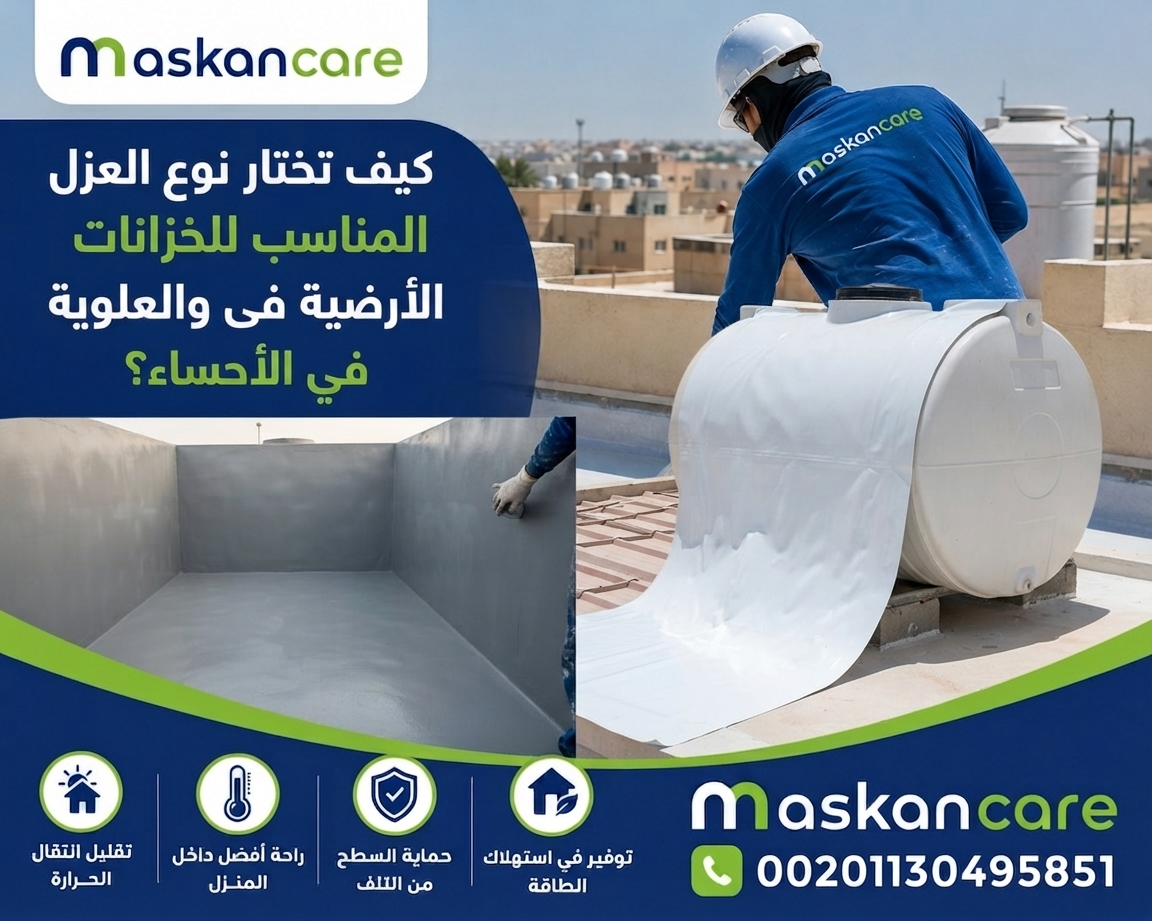
The appropriate approach also depends on the type and location of the tank. Underground tanks are exposed to different conditions than rooftop tanks, while concrete tanks require different treatment from plastic or fiberglass tanks. Therefore, there is no single insulation method that is suitable for every situation.
Properly identifying the tank's condition before starting the work can help reduce unnecessary repairs and improve the effectiveness of the insulation system.
Why Does a Water Tank Need Insulation?
Waterproofing helps reduce the possibility of water passing from the tank into surrounding areas or, in some cases, moisture entering from outside. When waterproofing becomes damaged, a small issue can gradually become more noticeable, especially if cracks, joints, or weak points are left untreated.
Continuous leakage can also lead to unnecessary water loss and increased consumption. Detecting a leak early is therefore more practical than waiting until its effects become obvious. Inspection can also help determine whether the problem is related to the insulation itself, a pipe connection, a float valve, or a crack in the tank.
Insulation, however, is not a substitute for structural repairs. If there is a visible crack or significant damage to the tank itself, the underlying problem should be addressed before applying a new insulation layer. Applying new material over an unstable or damaged surface may not provide the desired result.
For this reason, inspection and preparation are important parts of any professional water tank insulation process.
Common Causes of Leaks and Moisture Around Water Tanks
Water tank problems can occur for several reasons. These may include cracks in the walls or floor, damaged joints, weak areas where walls meet the floor, or deterioration around connected pipes and fittings.
Underground tanks can be exposed to moisture from the surrounding environment, while rooftop tanks may be exposed to sunlight, heat, and temperature changes. Over time, these conditions can affect some materials and may contribute to deterioration.
Signs that deserve inspection include moisture stains near the tank, unexplained water-level reduction, persistent wetness in a particular area, or visible cracks in the walls or floor.
However, the appearance of one of these signs does not necessarily mean that the insulation is the only cause. A proper inspection should be carried out to determine whether the source is the tank body, plumbing connections, or another part of the system.
Identifying the actual cause before choosing a solution can prevent unnecessary work and make the repair process more effective.
Waterproofing Water Tanks in Qatif
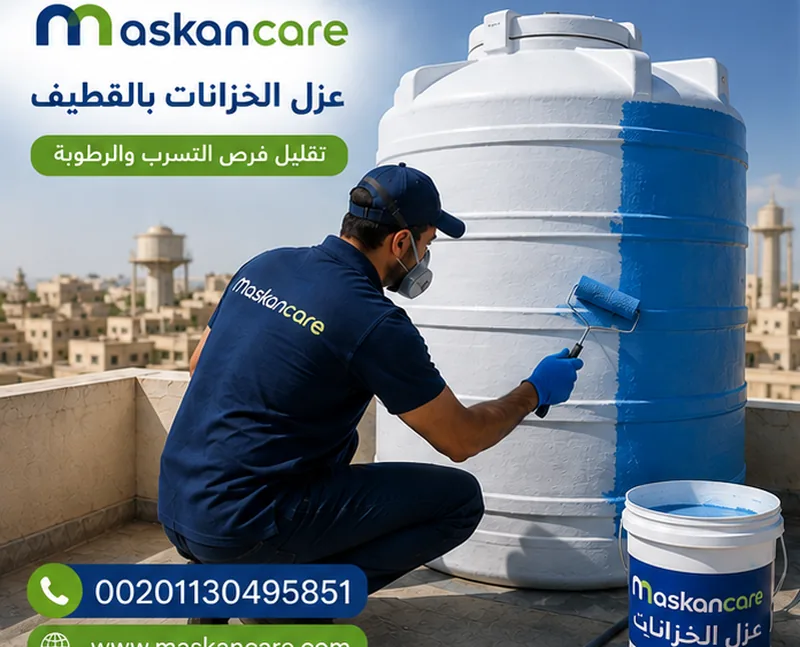
Waterproofing is one of the main methods used to reduce the risk of water leakage from tanks and protect surrounding areas from moisture. The appropriate waterproofing system depends on the type of tank, its location, the condition of the surface, and the intended use of the tank.
Before waterproofing is applied, the surface must be prepared properly. This can include cleaning the surface, removing weak or loose material, and ensuring that the surface meets the moisture and preparation requirements of the selected system.
Cracks, joints, and areas where leakage occurs should also be treated before applying the main waterproofing layer.
Once the surface has been prepared, the selected waterproofing material can be applied according to the manufacturer's instructions. The completed layer should then be inspected to make sure there are no untreated areas, gaps, or obvious weaknesses.
Proper preparation is particularly important because even a high-quality material may perform poorly if it is applied over a dirty, damaged, or unsuitable surface.
The Importance of Inspecting the Tank Before Insulation
One of the mistakes that can affect insulation performance is beginning the application without first inspecting the tank. Insulation does not work independently from the condition of the tank. Its performance depends on the quality of the surface and the structural condition of the areas being treated.
The inspection should cover the walls, floor, joints, fittings, and areas where moisture or leakage may be visible. The condition of any existing insulation layer should also be assessed.
If the old insulation layer is peeling, cracked, or damaged, it may be necessary to remove the defective sections and prepare the surface again instead of simply covering everything with another layer.
After inspection, it becomes easier to determine whether the tank requires preliminary repairs, localized treatment, or a complete waterproofing system.
This step can also help prevent the common problem of treating the visible symptom without addressing the actual source of the leak.
Underground Water Tank Insulation in Qatif
Underground tanks differ from rooftop tanks because of their location and the conditions surrounding them. Their walls, floors, joints, and external surfaces may be exposed to moisture from the surrounding soil or other environmental factors.
Weak internal waterproofing can allow water to escape from the tank, while certain situations may also require external protection depending on the construction and source of the moisture.
Corners and areas where the walls meet the floor deserve particular attention because these points should be carefully inspected when assessing the tank's condition.
Pipes, openings, and other connections should not be ignored either. The source of the problem may sometimes be outside the insulation layer itself.
A proper assessment can determine whether the tank requires internal insulation, external waterproofing, repairs, or a combination of different treatments.
Rooftop Water Tank Insulation in Qatif
Rooftop tanks are exposed to different environmental conditions, particularly when they are installed in open areas. External protection can therefore be important in some situations, along with checking the condition of the tank body and its connections.
The tank should be inspected for cracks, deformation, deterioration, or other visible signs of damage. Based on its condition, it may require repair, insulation, or replacement if the damage is too extensive.
Protection from heat may also be considered for certain rooftop tanks, although the appropriate system depends on the material of the tank, its location, design, and exposure to weather conditions.
Because rooftop tanks are more exposed to environmental factors, regular inspection can help identify deterioration before it develops into a more serious problem.
Internal Water Tank Insulation
Internal insulation requires special attention because the insulating layer comes into contact with the stored water. The material must therefore be suitable for the intended application, particularly when the tank is used for drinking water.
Before application, the tank should be cleaned and properly prepared, while cracks and weak areas should be treated first. After the insulation is applied, the surface should be checked to make sure the layer is complete and properly bonded according to the selected system.
Randomly applying any waterproofing material inside a drinking water tank is not recommended. The material should be selected based on its intended use and the relevant safety and application requirements.
The manufacturer's instructions regarding preparation, application, curing, drying, and returning the tank to service should also be followed carefully.
External Water Tank Waterproofing
External waterproofing can be particularly useful for underground tanks exposed to moisture from the surrounding environment. Its purpose is to reduce the possibility of water and moisture reaching the tank structure and to protect the tank from external conditions where appropriate.
However, the ability to apply external waterproofing depends on the tank's construction and whether its outer surfaces can be safely accessed.
External waterproofing does not necessarily eliminate the need for internal treatment. Some tanks may require protection from one side, while others may require treatment from multiple directions depending on the source of the leakage and the tank's condition.
A proper inspection is therefore important before deciding which side of the tank needs treatment.
Common Materials Used for Water Tank Insulation
There are several systems and materials that can be used for water tank waterproofing and insulation. The material should not be selected based only on its name or general reputation. It needs to be compatible with the type of tank, its location, the surface condition, and the intended use.
Some insulation systems may use modified cement-based materials, suitable epoxy systems, polymer-based products, or external waterproofing systems designed for underground structures.
Cement-based waterproofing materials can be used in certain applications involving concrete surfaces and can help improve resistance to water penetration. Other systems may serve as a finishing layer or as part of a multi-layer waterproofing system.
Epoxy products must also be specifically suitable for their intended application, particularly when used on the internal surface of a water tank. Simply being water-resistant is not enough. The product's technical characteristics and application instructions should be reviewed before use.
For tanks intended to store drinking water, the suitability of the material for that purpose should be considered before application.
Stages of Water Tank Insulation
The exact process varies from one tank to another, but a properly organized insulation project generally involves several basic stages.
First, the tank is inspected to identify the source of leakage or moisture if one exists. The tank is then emptied, cleaned, and prepared according to the requirements of the selected system.
Next, cracks, joints, and damaged areas are repaired. This stage is important because applying waterproofing over an existing structural or leakage problem may result in poor performance.
The selected insulation system is then applied according to the product instructions, including the required thickness, number of coats, and drying or curing period.
After application, the completed insulation layer should be inspected for gaps, weak areas, or incomplete coverage. An appropriate test may then be carried out to assess the effectiveness of the treatment before the tank is returned to normal use.
The details of testing depend on the type of tank, insulation system, and nature of the work.
How Does Insulation Reduce the Risk of Leakage?
The basic idea behind waterproofing is to create a barrier that reduces the movement of water through surfaces that are vulnerable to leakage. However, the effectiveness of that barrier depends on proper surface preparation, material selection, and application.
If cracks or open joints are not repaired, leakage may continue even after a new waterproofing layer has been installed. This is why treating weak points is an important part of the insulation process.
Regular inspection also helps identify deterioration in the waterproofing layer before it develops into a visible leak.
Water tank maintenance should therefore combine insulation with periodic inspection rather than treating insulation as a one-time solution that eliminates the need for future attention.
Signs That Your Water Tank Needs Inspection and Insulation
Several signs may indicate that a water tank needs to be inspected. These include unexplained reduction in the water level, moisture around the tank, visible cracks, or wet marks on nearby floors and walls.
A recurring problem despite previous repairs may also indicate that the original cause has not been fully addressed.
It is important not to rely on a single sign when assessing the tank. A comprehensive inspection can help distinguish between leakage caused by the tank structure and leakage caused by pipes, fittings, valves, or other components.
Identifying the source accurately can prevent unnecessary insulation work and ensure that the appropriate solution is applied.
The Importance of Cleaning the Tank Before Insulation
Insulation cannot be separated from proper tank preparation. Dust, sediment, loose material, or other contaminants on the surface can affect the adhesion of the insulation material and reduce the quality of the application.
For this reason, the surface should be cleaned and loose or unstable material should be removed before waterproofing begins. Moisture should also be handled according to the requirements of the selected system.
For tanks used to store drinking water, cleaning and preparation should be carried out appropriately. The tank should not be returned to service until the necessary procedures related to the insulation material and cleaning process have been completed.
Proper preparation creates a more suitable surface for the waterproofing system and can improve its overall performance.
Insulation and Reducing Moisture Around the Tank
When water escapes from a tank into surrounding areas, moisture may appear on nearby floors or walls. If the source continues, the signs can become increasingly noticeable over time.
Proper insulation can help reduce the possibility of water moving out of the tank, but the source of the moisture should first be identified. Moisture may be caused by a leaking tank, but it can also originate from plumbing, groundwater, or another part of the building.
Therefore, addressing moisture begins with diagnosis. The source should be treated before relying on insulation as the final solution.
Covering a visible stain without determining where the water is coming from may only hide the symptom temporarily.
Maintaining the Insulation After Installation
Insulation does not mean that the tank can be ignored afterward. Regular monitoring can help identify changes in the condition of the tank or its waterproofing layer.
The areas surrounding the tank should be monitored for new moisture, while changes in water levels, new cracks, and signs of leakage should also receive attention.
Pipes, fittings, valves, and other components connected to the tank should be inspected periodically as well.
If a new problem appears, addressing it early can be easier than waiting until the issue becomes more extensive.
The Difference Between Tank Leak Repair and Insulation
Leak repair involves addressing a specific point or cause that allows water to escape, while insulation aims to create or renew a barrier that protects surfaces against water penetration.
Some situations require both repair and insulation. If a crack exists in the tank structure, for example, the crack should be treated before the waterproofing layer is applied.
If the problem is caused by a pipe connection or valve, applying insulation alone will not necessarily solve it. The actual source must therefore be identified before work begins.
This distinction is important because insulation should be part of an overall solution rather than a replacement for necessary repairs.
Water Tank Insulation for Drinking Water in Qatif
Water tanks used for drinking water require additional care when selecting internal insulation materials. The product should be appropriate for contact with stored water and should be applied according to the manufacturer's instructions and relevant safety requirements.
The tank should also be properly cleaned before and after the work, and it should not be returned to normal use until the required preparation and curing procedures have been completed.
These steps help reduce the possibility of problems resulting from unsuitable materials or improper application.
Choosing a material simply because it is waterproof is not sufficient. Its intended use, application requirements, and compatibility with the tank should all be considered.
Choosing a Water Tank Insulation Service in Qatif
When searching for water tank insulation in Qatif, price should not be the only consideration. Ask about the inspection process, the proposed material, and whether cracks and joints will be treated before insulation is applied.
The type of tank, its location, its material, and its current condition should also be explained to the service provider. These details can help determine the appropriate approach.
It is also better to have the work clearly explained before it begins, including surface preparation, application method, drying or curing time, and any testing that will be performed after completion.
A clear scope of work can make it easier to understand what is being done and why a particular insulation system has been selected.
Water Tank Insulation in Qatif with MaskanCare
When you need water tank insulation in Qatif, MaskanCare focuses on handling each tank according to its actual condition instead of applying the same solution to every property.
The service begins with inspecting the tank and identifying the areas that require attention. The surface is then prepared, weak material is removed where necessary, and cracks or joints are treated before the insulation system is applied.
We also consider whether the tank is underground or rooftop and identify the type of material from which it is made, as these factors can influence the appropriate treatment method.
For tanks requiring internal insulation, the selected material should be appropriate for the intended use, particularly when the tank stores drinking water. Application and curing instructions should also be followed before the tank is returned to service.
We pay attention to details that can affect the final result, including corners, wall-to-floor joints, connection points, and other areas where leakage may occur.
The goal of the service is to reduce the risk of leakage and moisture while helping homeowners maintain their water tanks in better condition through appropriate insulation and organized inspection.
Why Should You Avoid Delaying a Water Tank Leak?
Delaying a leak can make it more difficult to identify and treat the source, especially when water continues to reach surrounding areas.
Continuous leakage can also lead to unnecessary water loss, making early inspection a practical step for identifying the problem before it becomes more complicated.
This does not mean that every leak will necessarily cause major damage, but addressing warning signs early can help determine the cause and the appropriate solution.
Early attention can also prevent homeowners from relying on temporary fixes that do not address the underlying problem.
Tips for Maintaining a Water Tank After Insulation
After the insulation has been completed, several simple steps can help maintain the condition of the tank.
It is useful to monitor water levels, check the areas surrounding the tank for signs of moisture, and inspect pipes and connections periodically.
Any new crack, visible deterioration, or sign of leakage should not be ignored. If a problem appears, an inspection can help determine its source rather than relying on temporary solutions.
For rooftop tanks, the external body, cover, and connections should also be monitored, particularly when the tank is exposed to direct sunlight and changing weather conditions.
Regular observation can help identify small changes before they develop into larger maintenance problems.
Conclusion
Water tank insulation in Qatif is an important measure for reducing the risk of water leakage and moisture while protecting the tank and surrounding areas from the effects of leaks. A successful insulation process begins with inspecting the tank and identifying the source of the problem, followed by treating cracks and joints, preparing the surface, and selecting an appropriate waterproofing system.
The treatment of underground tanks differs from that of rooftop tanks, and the appropriate materials and methods can also vary depending on the tank's construction, location, and condition. For this reason, using the same solution for every tank is not recommended.
Insulation also does not eliminate the need for inspection and maintenance. Monitoring the condition of the tank, pipes, fittings, and waterproofing layer can help identify problems early and reduce the possibility of them becoming more serious.
If you notice moisture around the tank, unexplained water loss, visible cracks, or recurring leakage, professional inspection can help identify the actual source before the appropriate treatment is selected.
With water tank insulation in Qatif from MaskanCare, the tank can be assessed according to its condition and requirements, with attention given to surface preparation, weak points, and the selection of an insulation method suitable for the intended use.
Ultimately, protecting a water tank does not depend on insulation alone. It involves combining suitable waterproofing with regular inspection, proper maintenance, and prompt attention to any signs of leakage or moisture.
Maintaining this approach can help homeowners reduce unnecessary water loss, protect surrounding surfaces, and keep their water storage system in better condition over time.